


Views: 0 Author: Site Editor Publish Time: 2026-10-08 Origin: Site


Cooling a workshop presents unique thermal challenges. You frequently deal with open bay doors. High ambient heat radiates constantly from heavy machinery. Uninsulated walls make traditional air conditioning prohibitively expensive and highly inefficient for these rugged spaces. Facility managers and serious DIYers must make a critical equipment choice. They usually decide between fixed window or wall-mounted evaporative systems and heavy-duty portable units. We built this guide to help you choose confidently. Our strictly evidence-based framework helps you evaluate cooling capacity, airflow limits, and operational realities for demanding workshop environments. You will learn how to match equipment exactly to your specific climate baseline. We also explore the physical footprint, air exchange rates, and daily maintenance demands of each cooling approach. By the end, you will know how to select the most effective system for your specific workspace.
Effective workshop cooling requires volumetric air replacement. It does not just rely on air recirculation. Stagnant air traps heat indoors. You must constantly push hot air out and bring fresh air in. This air exchange defines your cooling success.
Traditional compressor-based air conditioning often fails in open-door environments. It relies on a sealed thermal envelope. Open bay doors destroy this envelope instantly. You lose thousands of BTUs through uninsulated walls. High-dust environments also ruin traditional AC units. Sawdust and metal shavings clog standard filters quickly. The compressor works harder. Energy bills skyrocket. The space remains uncomfortably hot.
Evaporative cooling offers a practical alternative. However, we must state a transparent assumption. Evaporative cooling relies heavily on low relative humidity. We call this the climate gatekeeper. Adiabatic cooling evaporates water to lower air temperatures. It requires dry ambient air to function effectively. You must establish baseline climate requirements. Neither system performs well if your local wet-bulb temperature frequently exceeds 70°F (21°C). The air cannot absorb more moisture. The cooling effect drops significantly. You must check your local climate data before purchasing any evaporative equipment.
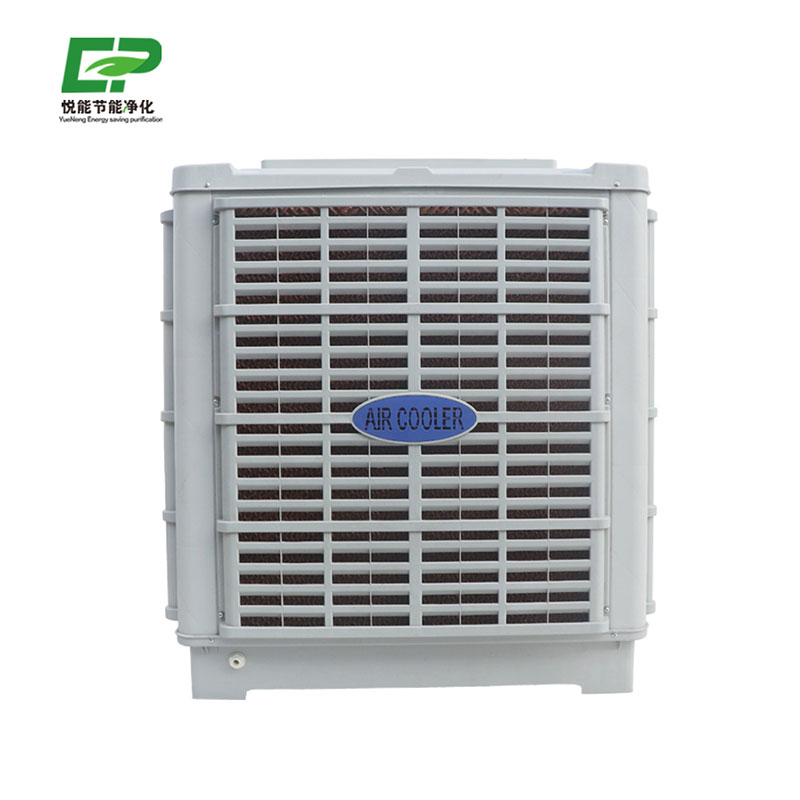
A fixed evaporative system provides continuous, whole-space air exchange. It mounts directly through a wall or window frame. This approach saves valuable operational floor space. Workshops rarely have extra room to spare. Moving heavy equipment around a large floor unit is frustrating. A secure window mounted evaporative air cooler keeps your aisles completely clear.
You must size your equipment for commercial volume. Small domestic units cannot cool a large industrial space. High-CFM units are absolutely necessary. They push enough air to replace the entire workshop volume rapidly. For example, deploying a 22,000 m³/h window-mounted air cooler creates massive airflow for multi-bay spaces. This sheer volume creates a noticeable wind-chill effect. It cools the machinery, the walls, and the workers simultaneously.
Fixed systems offer excellent operational perks. They use direct hard-plumbed water lines. You never have to manually refill a water tank. A float valve automatically maintains the correct water level. The system operates autonomously during busy workdays.
These units also generate positive air pressure. They constantly force outside air into the building. This pressure finds the path of least resistance. It naturally pushes dust, welding fumes, and chemical odors out through open doors. Your indoor air quality improves dramatically.
Fixed installations introduce specific challenges. They require structural modifications. You might need to cut through corrugated metal or frame out a custom window. Exterior aesthetic constraints often apply. Landlords or zoning boards might restrict exterior attachments. Finally, you must plan for seasonal winterization. You have to drain the water lines completely. You must cover the exterior unit to prevent freezing damage during winter months.
Portable coolers deliver immediate deployment. You unbox the unit, add water, and plug it in. They create targeted cooling zones instantly. They offer multi-location flexibility across large facilities. You simply roll them where you need them most.
Portable units excel in specific scenarios. They are perfect for rented spaces. Tenants usually cannot alter the building structure. They work beautifully for highly variable work zones. You might cool a welding station in the morning. You can roll the same unit to an automotive lift in the afternoon. They provide relief in areas where wall mounting is strictly prohibited.
Portable units introduce daily operational friction. They consume significant floor space in tight workshops. Large commercial models are bulky. They block walkways and staging areas.
Water management becomes a daily burden. You must manually refill the internal tank using buckets or hoses. Dragging a garden hose across a shop floor creates severe tripping hazards. If you forget to add water, the pump runs dry. The cooling effect stops entirely.
Finally, these units provide directional cooling. They cool the worker standing directly in front of the fan. They do not cool the whole shop. You cannot achieve true volumetric air replacement using a localized portable fan.
You must weigh upfront costs against long-term lifecycle maintenance. Window units require higher initial installation investments. You must pay for framing, electrical routing, and plumbing lines. However, automated systems require much lower daily labor. Portable units cost less upfront. They require zero installation. Yet, they demand daily manual labor for refilling and repositioning.
Mineral buildup impacts both system types heavily. Hard water scaling destroys cooling media over time. You must regularly descale the equipment. Routine maintenance extends equipment life significantly. When servicing your window mounted evaporative air cooler, you will notice differences in media degradation. Rigid cellulose media handles scale better than traditional aspen pads. Rigid pads last longer and provide consistent cooling efficiency.
Routine cleaning access differs wildly between the two designs. Fixed units require climbing a ladder for seasonal maintenance. You must work at heights to replace pads or clean the water pan. Portable units offer convenient floor-level access. You can clean them easily during regular shop cleanup routines.
Safety regulations influence equipment choices. Window units require secure mounting brackets. You must ensure proper weather-sealing to prevent rain leaks. Portable units introduce workplace compliance issues. Trailing extension cords and water hoses violate OSHA standards for clear walkways. Facility managers must implement strict cord management protocols to prevent workplace injuries.
Cooling System Feature Comparison
| Feature Evaluated | Window-Mounted Evaporative System | Portable Evaporative Unit |
|---|---|---|
| Installation Requirement | Structural framing, plumbing, hardwiring | None (plug-and-play capability) |
| Floor Space Impact | Zero footprint consumed | High footprint consumption |
| Water Delivery | Automated via hard-plumbed line | Manual tank refills or temporary hoses |
| Cooling Scope | Volumetric (entire shop volume) | Directional (spot-cooling specific zones) |
| Air Quality Impact | Creates positive pressure to expel fumes | Recirculates localized air mostly |
| Portability | Fixed location | Highly mobile on casters |
Choosing the right equipment requires honest operational assessment. You must match the hardware to your daily reality.
You must calculate your exact cooling needs before purchasing. Never guess your capacity requirements. Follow these steps to establish your baseline CFM (Cubic Feet per Minute) requirements:
Use this final number to review specific model spec sheets. You can now confidently match equipment output to your spatial reality.
Workshop cooling forces a definitive choice between automation and agility. Window-mounted systems prioritize floor space preservation and automated operation. They deliver massive volumetric cooling but demand structural commitment. Portable units prioritize deployment speed and targeted zone control. They require zero installation but demand daily manual labor and consume valuable aisle space.
Before moving forward, please review these final action steps:
A: No, you should never run them simultaneously in the same zone. Evaporative coolers constantly add humidity to the air to lower the temperature. Traditional air conditioners work by removing humidity from the air. Running both creates conflicting workloads. The evaporative unit fights the AC compressor. This drastically reduces the AC efficiency and wastes significant energy.
A: Dry, high-altitude climates maximize evaporative performance. The air contains very little moisture. This allows the saturated cooling pads to evaporate water rapidly. Lower ambient pressure and extreme low humidity significantly boost the temperature drop potential. In these specific regions, adiabatic cooling often rivals traditional compressor-based air conditioning for raw temperature reduction.
A: Window units keep the primary fan and mechanical noise partially outside the building envelope. The wall blocks a portion of the decibels. Heavy-duty portables generate all their noise directly inside the workspace. A large portable unit operating at maximum fan speed near a workstation is significantly louder and more disruptive to daily communication.


