


Views: 0 Author: Site Editor Publish Time: 2026-10-22 Origin: Site


Why do some factories struggle with heat despite strong ventilation? Poor airflow can waste energy and leave workers uncomfortable. An Air Cooling System helps improve air circulation and manage indoor heat. This guide explores cooling methods, ventilation design, energy efficiency, and equipment selection for industrial facilities.
Industrial ventilation does more than move air through a building. It helps control heat, remove stale air, and create better working conditions. In factories, poor airflow can leave hot zones around machinery and production lines. These conditions may affect worker comfort, equipment operation, and daily production.
An efficient Air Cooling System can support industrial ventilation by supplying cooler air and improving air movement. Evaporative cooling systems are especially worth considering in suitable, well-ventilated spaces. They use water evaporation to reduce incoming air temperature, while exhaust fans help remove warm, humid air.
However, better ventilation requires more than installing a powerful fan or cooler. Facility managers must consider building layout, heat loads, outdoor humidity, airflow paths, and energy use. This article explains how air cooling systems support ventilation efficiency, how different solutions compare, and how businesses can select equipment for their facilities.
Industrial facilities often struggle to control heat across large production areas. Machines, motors, lighting, and manufacturing processes all contribute to indoor heat loads. When ventilation cannot remove this heat efficiently, certain workstations become much hotter than others. Employees may experience discomfort, while facility managers face greater challenges maintaining stable working conditions. An effective Air Cooling System helps address this problem by combining temperature reduction with planned air movement.
Evaporative cooling systems draw outdoor air through wet cooling pads. Water evaporates from the pad surfaces and absorbs heat from the passing air. A fan then moves the cooled air into the occupied space. Unlike a system that only circulates existing indoor air, this arrangement can introduce fresh outdoor air. The system works best when the building also provides a suitable route for warm, humid air to escape. Its performance depends on outdoor humidity, airflow resistance, heat loads, and installation design.
Ventilation planning should begin with the factory's actual heat sources. Engineers should identify hot machinery, enclosed production areas, and workstations where employees remain for long periods. They can then determine where cooling air should enter and where exhaust air should leave. This approach helps avoid installing equipment without solving the underlying airflow problem. For businesses evaluating different configurations, Yueneng's industrial air cooler product range provides a starting point for reviewing available equipment.
Tip: Map the main heat sources and occupied work areas before choosing equipment. This makes airflow planning more practical and helps identify priority cooling zones.
Moving a large volume of air does not automatically create effective ventilation. Air must travel through the right areas before leaving the building. If supply outlets and exhaust fans are poorly positioned, cooled air may escape quickly or fail to reach workers. Machinery, partitions, storage racks, and building columns can also interrupt circulation. These obstacles make airflow distribution an important part of industrial cooling design.
A balanced arrangement considers both air supply and exhaust. The cooler introduces air into the workspace, while exhaust fans help remove warm air and excess moisture. Their combined performance depends on the available openings, fan placement, building pressure, and internal layout. Engineers should check whether incoming air can reach occupied zones without passing through contaminated areas. They should also avoid creating short airflow paths between supply outlets and exhaust points.
For example, a workshop may have sufficient total airflow but still contain a hot corner behind a production line. In this case, adding another large unit may not be the best first step. Adjusting outlet direction, removing airflow obstacles, or relocating an exhaust fan may produce a better result. Measurements at several workstations can reveal these problems more clearly than a single temperature reading. Managers should also repeat measurements during normal production, because machinery and worker activity change the ventilation load.
A well-planned industrial air cooling system therefore supports a broader ventilation strategy. It does not replace source extraction, dust collection, or other safety controls. Instead, it helps deliver cooling air where needed while supporting the removal of warm indoor air. This distinction is especially important in facilities where processes generate fumes, fine dust, or chemical vapors.
Note: Do not use general cooling fans as substitutes for required local exhaust ventilation. Hazardous emissions need controls designed for the specific process.
Evaporative cooling uses the natural process of water changing into vapor. When outdoor air passes through a wet cooling pad, some water evaporates and absorbs heat from the air. The outgoing air becomes cooler, although its moisture content increases. This process can support industrial ventilation in hot, relatively dry climates. It may be less effective when outdoor humidity is already high.
The key advantage is that the system cools incoming air while moving it into the building. A properly designed installation can therefore address two needs: delivering fresh air and improving thermal comfort. Conventional fans mainly move air without actively reducing its temperature. Refrigeration-based air conditioning can provide more precise temperature control, but it uses a different cooling process and may require a different ventilation arrangement.
Actual performance depends on the difference between the outdoor dry-bulb temperature and wet-bulb temperature. A larger difference generally offers greater evaporative cooling potential. A smaller difference limits the achievable temperature reduction. Engineers should use local climate data rather than relying only on a manufacturer's nominal capacity. They should also consider the moisture added to the indoor air, especially where materials or production processes are humidity-sensitive.
Cooling pads need suitable water distribution and regular maintenance. Dust, mineral deposits, or blocked surfaces can restrict airflow and reduce heat transfer. Poor maintenance may also increase pressure drop across the pads, making the fan work harder to deliver the required air volume. A maintenance plan should therefore cover pad inspection, water circulation, drainage, and cleaning.
For factories considering this approach, Yueneng's industrial evaporative air cooler rated at 40,000 m³/h is one product option to assess against site requirements. Its stated airflow and power rating should be checked against actual ventilation needs before selection.
Tip: Compare outdoor temperature and humidity during the hottest operating hours. These readings help determine whether evaporative cooling is suitable for your facility.
An evaporative cooler should be designed as part of an air exchange strategy. As fresh air enters, indoor air must have a clear path to leave. Without adequate exhaust, moisture may accumulate and reduce comfort. The indoor temperature may also remain high if the building continuously produces more heat than the ventilation system can remove.
Facility managers should evaluate the relationship between supply airflow and exhaust capacity. They need to consider the building's leakage, door openings, process extraction systems, and other ventilation equipment. The goal is not simply to maximize fan output. It is to create a predictable airflow path through the occupied area while removing unwanted heat and moisture.
Consider a large packaging workshop operating several machines throughout the day. The machines release heat, while workers and incoming outdoor air add to the total thermal load. An evaporative cooler can introduce cooler air near occupied work areas. Exhaust fans can then discharge warmer air through suitable openings. If the air supply enters too close to the exhaust, much of the cooling benefit may be lost before reaching workers. Adjusting equipment placement can help improve distribution.
Humidity also affects the final result. In dry weather, evaporation can provide a useful temperature reduction. In humid weather, the same system may deliver less cooling and increase indoor moisture. A facility that needs precise humidity control may require mechanical refrigeration or a hybrid system. Managers should also consider whether the process requires filtered, conditioned, or specially controlled air.
Effective ventilation therefore depends on several factors working together. The cooler, exhaust equipment, building openings, and operating schedule should be assessed as one system. This approach helps businesses avoid unrealistic performance expectations and supports more reliable cooling decisions.
Note: Monitor both temperature and relative humidity. A lower air temperature alone does not confirm improved workplace comfort.
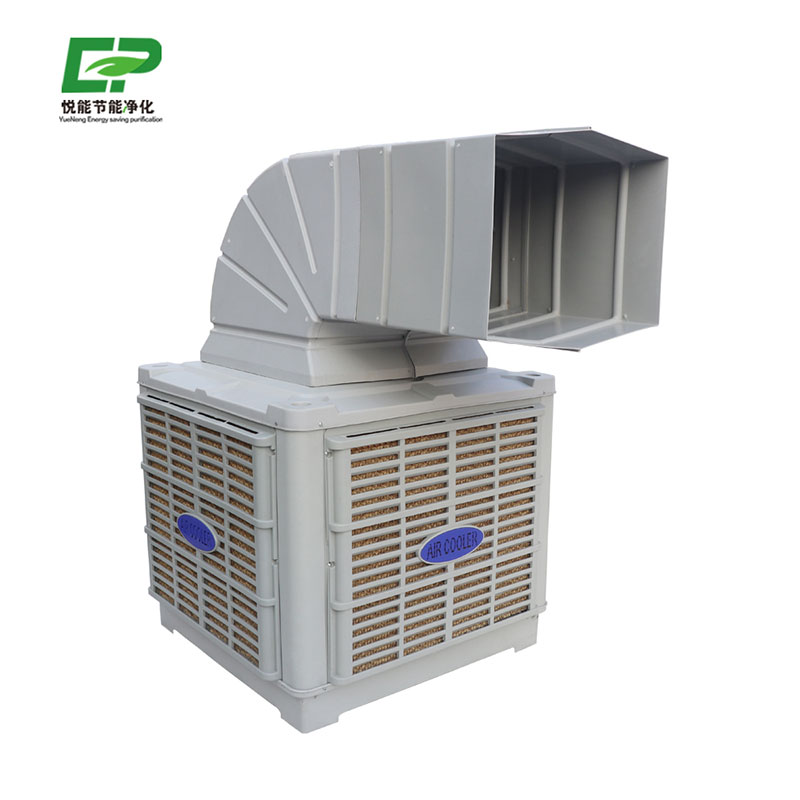
Large manufacturing facilities often need substantial airflow to serve multiple workstations. Their cooling requirements depend on floor area, ceiling height, machine heat output, worker density, and building ventilation. A high-capacity cooler may be appropriate when the facility has broad open spaces and a suitable exhaust route. However, its rated airflow does not guarantee uniform cooling across every part of the building.
The 4 kW, 40,000 m³/h industrial evaporative air cooler offers a reference point for facilities evaluating higher airflow requirements. Buyers should confirm its electrical supply, installation arrangement, and operating specifications. They should also check whether one large unit or several smaller units can provide better coverage. Multiple units may allow separate production zones to operate independently, although installation and maintenance costs must also be considered.
A useful selection process starts with the required airflow at the occupied zones. Engineers should estimate the heat load and determine how much outdoor air the building can accommodate. They can then assess outlet direction, mounting height, duct restrictions, and exhaust placement. Airflow measurements or commissioning tests can help confirm whether the installed system meets the design requirements.
High-capacity equipment is not always the most efficient choice. An oversized unit may create uncomfortable drafts or consume more resources than necessary. An undersized unit may leave hot areas unresolved during peak production. The best configuration matches the facility's operating conditions rather than simply choosing the highest available rating.
Maintenance access is equally important. Large systems need space for pad inspection, water-system servicing, and electrical checks. Managers should account for these requirements during installation planning. They should also confirm whether spare parts and technical support are available when needed.
Tip: Request an airflow layout showing the intended supply and exhaust paths. This helps verify coverage before equipment installation begins.
Some factories do not need permanent cooling across the entire building. Workstations may move, production schedules may change, or temporary tasks may create localized heat. In these situations, portable equipment can provide a more flexible option. It can direct airflow toward selected areas without requiring a complete fixed installation.
Yueneng offers a portable small air cooler for warehouses, workshops, and outdoor applications. This type of equipment may suit temporary work zones or changing layouts, subject to its rated capacity and environmental limits. Buyers should confirm the product's airflow, power requirements, noise level, and suitable operating conditions before use.
Portable cooling still requires thoughtful placement. The unit needs access to suitable incoming air, and the surrounding space must allow effective air movement. Placing it against an obstruction can restrict intake or discharge. Positioning it where workers cannot safely access controls or where water could create a slip hazard should also be avoided. If the unit uses evaporative cooling, the added moisture must be considered.
For larger workspaces, portable units may work best as part of a broader ventilation plan. They can provide targeted relief while fixed exhaust fans remove warm air from the building. However, they should not be expected to replace a properly designed system when the whole facility experiences excessive heat.
Facility managers should compare the flexibility of portable equipment against the benefits of fixed installation. Portable units may be easier to relocate, while fixed systems may offer more consistent coverage for stable production layouts. The decision should reflect how the space is used, how often conditions change, and how much cooling each area needs.
Note: Confirm the equipment's approved operating environment before using portable coolers outdoors or in areas exposed to water and dust.
Operating costs depend on more than the rated power of a cooling unit. Businesses should consider the number of operating hours, airflow delivered, water consumption, maintenance needs, and the comfort level achieved. A low-power unit may not be economical if it cannot handle the actual heat load. A larger unit may also waste resources if it runs continuously in areas that need little cooling.
Start by dividing the facility into practical cooling zones. Identify where people work, where machines generate heat, and where exhaust ventilation is available. Estimate the required airflow for each zone and compare it with the equipment's rated performance. The final selection should account for resistance from cooling pads, grilles, ducts, and other components that affect delivered airflow.
Yueneng's 1.1 kW, 18,000 m³/h industrial evaporative air cooler provides another option for comparison. Buyers should confirm the latest product data and determine whether its capacity suits the intended area. Comparing models on the same basis makes it easier to understand the relationship between power, airflow, and installation requirements.
Operating schedules can also influence energy use. If only one production zone operates during certain shifts, managers may be able to run selected equipment rather than the entire system. This approach requires appropriate controls and enough ventilation to maintain safe conditions. Any adjustment should follow the facility's operational and safety requirements.
Businesses should estimate annual costs using realistic operating hours and local utility rates. Include electricity, water, cleaning, replacement components, and expected service needs. Then compare these costs against the cooling performance each system can deliver. This provides a stronger basis for purchasing decisions than comparing equipment prices alone.
Tip: Ask suppliers for rated power, airflow, water consumption, and operating requirements. Use these figures to prepare a site-specific cost estimate.
An industrial air cooling system can lose efficiency when components become dirty or airflow paths become restricted. Cooling pads may collect dust and mineral deposits. Pumps, water distribution lines, and filters may also need inspection. These problems can reduce cooling performance and increase the effort required to maintain the target airflow.
A preventive maintenance plan should reflect the facility's operating environment. Dusty workshops may need more frequent inspections than cleaner assembly areas. Water quality can also affect pad condition and the frequency of cleaning. Staff should follow the manufacturer's maintenance instructions rather than applying the same schedule to every installation.
Maintenance should cover the fan, motor, cooling pads, water circulation, drainage, electrical connections, and exhaust equipment. Workers must isolate electrical power before servicing relevant components. They should also follow safe procedures for cleaning and handling water systems. Damaged parts should be repaired or replaced according to supplier guidance.
Performance checks are just as important as cleaning. Record temperature, relative humidity, airflow, and operating power where practical. Compare readings over time to identify unexpected changes. If a previously comfortable area becomes hot, investigate airflow restrictions, pad condition, changes in production heat, and exhaust performance before replacing equipment.
A documented maintenance history also supports budgeting and replacement planning. It helps managers identify recurring faults and estimate the long-term cost of ownership. When problems persist, a qualified technician can assess whether the issue comes from equipment condition, poor placement, or an incorrect system design.
Note: Keep inspection records and track recurring performance issues. These records help distinguish maintenance problems from insufficient system capacity.
Not every product described as an air cooling system serves the same purpose. Industrial evaporative coolers generally move outdoor air into occupied spaces while reducing its temperature through evaporation. Precision air cooling systems serve different requirements, such as controlling temperatures inside enclosed equipment spaces. Understanding this difference helps buyers avoid choosing equipment for the wrong application.
For example, an evaporative cooler may suit a well-ventilated workshop where workers need relief from heat. A battery energy storage system may instead require dedicated cooling designed for its electrical equipment and operating limits. These systems cannot be treated as interchangeable simply because both use air to transfer heat.
The indoor air-cooling energy storage system listed by SH Tech illustrates a different application. It concerns cooling for battery energy storage equipment, rather than general factory ventilation. Such equipment requires attention to the manufacturer's operating limits, thermal management requirements, and applicable safety standards.
Businesses should define the purpose of cooling before comparing products. Is the main goal to improve worker comfort, remove process heat, maintain an equipment enclosure, or control temperature within a sensitive production environment? Each objective involves different design requirements. A ventilation cooler may not provide the precise temperature control needed by sensitive equipment. Likewise, a dedicated equipment cooling system may not provide the outdoor air exchange required in a workshop.
The distinction also affects energy calculations and maintenance planning. General ventilation equipment must be evaluated against building airflow and climate conditions. Enclosed equipment cooling must be assessed against its internal heat load and specified operating range. Buyers should ask suppliers to confirm the intended application and system limitations before making a purchase.
Note: Never assume a general-purpose evaporative cooler can replace a dedicated thermal management system for batteries, electrical cabinets, or other sensitive equipment.
Some facilities need several technologies to manage different problems. An industrial air cooler may provide incoming cooling air, while exhaust fans remove warm indoor air. Local extraction systems may separately capture fumes or dust near production equipment. In other cases, conventional air conditioning may be necessary for spaces requiring tighter temperature or humidity control.
The important task is to coordinate these systems rather than installing each one independently. For example, an exhaust fan may remove air faster than the cooler can supply it. This can create negative pressure and draw replacement air through uncontrolled openings. Conversely, insufficient exhaust can allow heat and moisture to accumulate. Engineers should consider the effects of each fan, cooler, and extraction system on the building's overall airflow.
The factory layout also influences equipment placement. Supply air should reach occupied areas before leaving through exhaust openings. Local extraction should capture contaminants close to their source. Cooling equipment should not redirect hazardous emissions toward workers or interfere with required safety controls. These relationships are best assessed during ventilation planning and commissioning.
Where precise process conditions matter, a hybrid solution may combine general ventilation with dedicated air conditioning. The ventilation system can address fresh-air requirements, while the air conditioning system controls designated areas. This arrangement may improve operational flexibility, but its suitability depends on climate, building design, and energy costs.
Facility managers should document the function of each component. They should know which units supply air, which remove heat, and which control process conditions. Clear responsibilities make maintenance and troubleshooting easier. They also help prevent unnecessary duplication when new production lines or equipment are added.
Tip: Have a qualified ventilation engineer review interactions between supply fans, exhaust fans, local extraction, and air conditioning before changing the system layout.

A reliable selection process starts with a site assessment. Buyers should document the building's dimensions, ceiling height, operating hours, occupancy, and major heat sources. They should also identify the hottest work areas and any processes requiring special air-quality controls. These details provide the foundation for airflow and cooling calculations.
Outdoor climate is another essential factor. Evaporative cooling performance depends heavily on temperature and humidity. Facilities in hot, dry regions may achieve better results than those in consistently humid climates. Managers should use representative weather data from the actual operating season rather than relying on annual averages alone.
The next step is to establish the required ventilation and cooling performance. Engineers can estimate heat loads, evaluate airflow paths, and determine the necessary supply and exhaust capacity. They should consider obstructions, openings, air distribution, and pressure losses. If the building contains multiple zones, each zone may need a separate assessment.
Product specifications should then be compared against the calculated requirements. Check rated airflow, power, water consumption, mounting options, electrical supply, and maintenance access. Ask the supplier to clarify whether published airflow figures represent free-air performance or another test condition. Confirm the recommended installation arrangement and any limitations affecting performance.
Commissioning completes the process. After installation, measure conditions at representative workstations during normal production. Check whether the system delivers the expected airflow and whether temperature and humidity remain acceptable. Adjust outlet direction or operating schedules where appropriate. If results fall short, investigate the cause before purchasing additional units.
A documented assessment makes purchasing more transparent. It gives facility managers a clear basis for comparing proposals and checking installed performance. It also helps suppliers recommend equipment suited to the actual application rather than relying on general product descriptions.
Tip: Prepare a site information sheet covering building dimensions, heat sources, climate, operating hours, and ventilation constraints before requesting quotations.
Selecting the right equipment also requires reviewing the supplier's technical capability. Buyers should examine product specifications, available configurations, warranty terms, spare parts, and maintenance guidance. They should confirm whether the supplier can answer installation questions and provide support when operating conditions change. These factors influence the practical value of the equipment over its service life.
Nantong Yueneng Energy Saving Purification Equipment Co., Ltd. manufactures ventilation, cooling, humidification, and heating equipment. Its product range includes industrial air coolers, evaporative cooling pads, and exhaust fans. The company reports more than 16 years of industry experience and exports to over 30 countries and regions. Its products serve applications such as workshops, greenhouses, and animal husbandry.
Buyers can review Yueneng's industrial air cooler range to compare available options. For facilities needing higher airflow, the 4 kW, 40,000 m³/h industrial evaporative air cooler may be relevant for further evaluation. Smaller or more flexible work areas may instead warrant consideration of the portable air cooler for workshops and warehouses. Final suitability depends on site calculations and verified product specifications.
Before placing an order, ask for a written quotation and technical configuration. Confirm electrical requirements, installation responsibilities, delivery terms, warranty coverage, and replacement-part availability. Request clarification whenever a specification does not match the site's requirements. This reduces uncertainty during installation and helps avoid purchasing equipment that cannot deliver the required performance.
A good supplier relationship should continue after delivery. Installation guidance, maintenance information, and access to replacement parts can help protect the equipment investment. Businesses should evaluate these service factors alongside purchase price and rated performance.
Note: Verify all technical specifications and service commitments in writing. Do not assume that similar product names indicate identical performance or capabilities.
An efficient industrial ventilation solution depends on coordinated airflow, suitable cooling technology, and regular maintenance. An Air Cooling System can help reduce heat discomfort and improve air circulation when its design matches the factory's operating conditions. Evaporative cooling is particularly useful in suitable climates, while other applications may require refrigeration-based or dedicated equipment cooling.
Businesses should assess heat loads, humidity, airflow paths, and operating costs before selecting equipment. They should also consider exhaust ventilation, maintenance access, and future production changes. These steps help ensure that the chosen system supports actual workplace needs instead of relying on rated capacity alone.
Yueneng offers industrial air coolers, cooling pads, and exhaust fans for different applications. Its product range provides options for facilities evaluating cooling and ventilation improvements. Manufacturers can review the industrial air cooler product range and discuss their requirements with the company.
Call to Action: Contact Yueneng to discuss your factory layout, required airflow, and cooling conditions. A site-specific assessment can help identify suitable equipment and support a more efficient industrial ventilation strategy.
An efficient Air Cooling System improves airflow, manages heat, and supports industrial ventilation. Proper equipment selection and maintenance help control operating costs. Nantong Yueneng Energy Saving Purification Equipment Co., Ltd. offers industrial air coolers, cooling pads, and exhaust fans. Its solutions help businesses improve workplace comfort and meet diverse cooling needs.
A: An Air Cooling System supplies cooler air and helps remove indoor heat when paired with proper exhaust ventilation.
A: Evaporative cooling suits well-ventilated spaces in relatively dry climates.
A: It may lower electricity use compared with conventional air conditioning, depending on operating conditions.
A: Match airflow capacity to heat loads, balance exhaust ventilation, and maintain cooling pads regularly.


