


Views: 168 Author: Site Editor Publish Time: 2026-01-29 Origin: Site


If you’ve ever taken a closer look at an industrial building, a warehouse, or even a large workshop, you’ve probably noticed a lot of fans installed in different places. Some are mounted on walls, some are hidden in duct systems, and others sit on rooftops. They all move air, but they don’t all do the same job. That’s where confusion usually starts—especially when people mix up exhaust fans and ventilation fans.
In reality, the distinction is more important than it seems. Choosing the wrong system can affect air quality, safety, energy use, and even compliance with regulations. This is especially true when we’re talking about an industrial exhaust fan, which plays a very specific role in demanding environments.
In this article, I’ll break down the exhaust fan vs ventilation fan debate in a clear, practical way. We’ll look at how each one works, what they’re designed to do, where they’re commonly used, and why understanding the difference actually matters—especially in industrial settings.
Before comparing the two, it helps to clearly define what each fan is meant to do.
An exhaust fan is designed to remove air from a space and discharge it outside. That air might be:
Hot
Humid
Smelly
Dusty
Contaminated with fumes or chemicals
In industrial environments, an industrial exhaust fan is often responsible for pulling hazardous or unwanted air away from workers and equipment. Once that air is removed, fresh air enters the space naturally or through a separate intake system.
The key idea is simple: exhaust fans focus on air removal.
A ventilation fan is part of a broader system designed to manage air movement within a building. Instead of only removing air, ventilation fans may:
Bring fresh air in
Distribute air evenly
Circulate air between spaces
Ventilation fans focus on air exchange and circulation rather than just air removal.
This basic distinction is the foundation of the exhaust fan versus ventilation fan discussion.
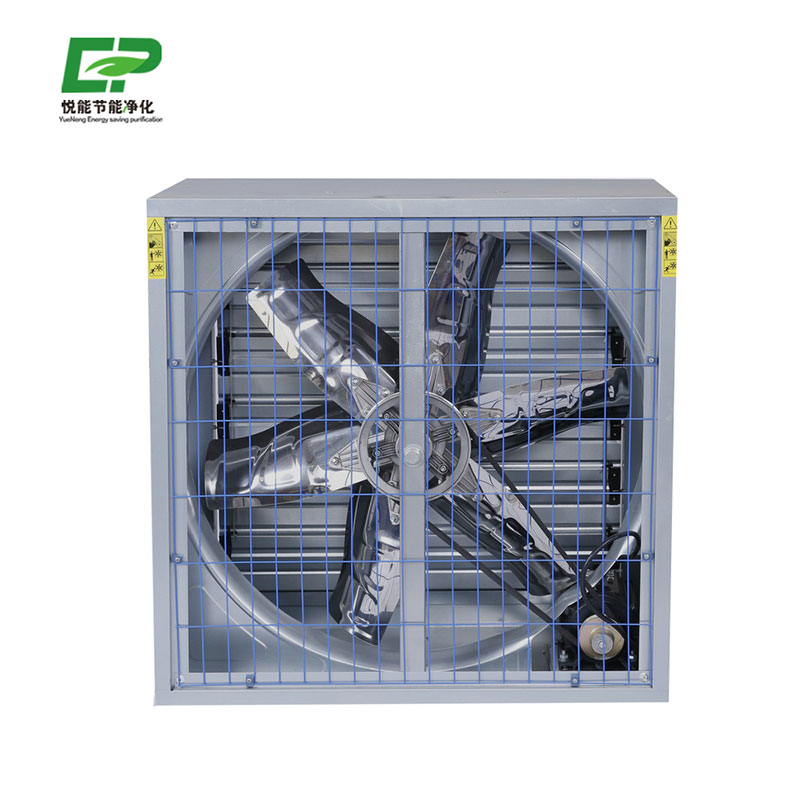 The Core Difference Between Exhaust and Ventilation Fan
The main difference between exhaust and ventilation fan comes down to purpose.
Exhaust fans remove unwanted air from a space
Ventilation fans manage overall airflow and air balance
In other words, exhaust fans are targeted and directional, while ventilation fans are systemic and balanced.
An industrial exhaust fan creates a pressure difference. When the fan pushes air out of a space, the internal air pressure drops. That lower pressure allows fresh air to flow in from other openings or intake vents.
High airflow capacity
Built for continuous operation
Designed to handle heat, dust, fumes, or chemicals
Often connected to duct systems or filters
These fans are commonly used in factories, processing plants, workshops, and warehouses where air quality can quickly become unsafe.
Ventilation fans usually operate as part of a larger air management system. Instead of focusing on one problem area, they work to maintain consistent airflow throughout an entire building.
Balanced air intake and exhaust
Designed for circulation
Often integrated with HVAC systems
Focused on comfort and air freshness
This makes ventilation fans ideal for environments where air quality needs to be stable rather than aggressively controlled.
In industrial environments, air contamination is often unavoidable. Machines generate heat, processes release fumes, and materials create dust. This is where the industrial exhaust fan becomes essential.
Removing harmful air reduces exposure to:
Toxic vapors
Fine particles
Smoke
Excessive heat
This directly supports worker safety.
Many industries are required to meet strict air quality standards. Exhaust fans help facilities comply by removing contaminants at the source.
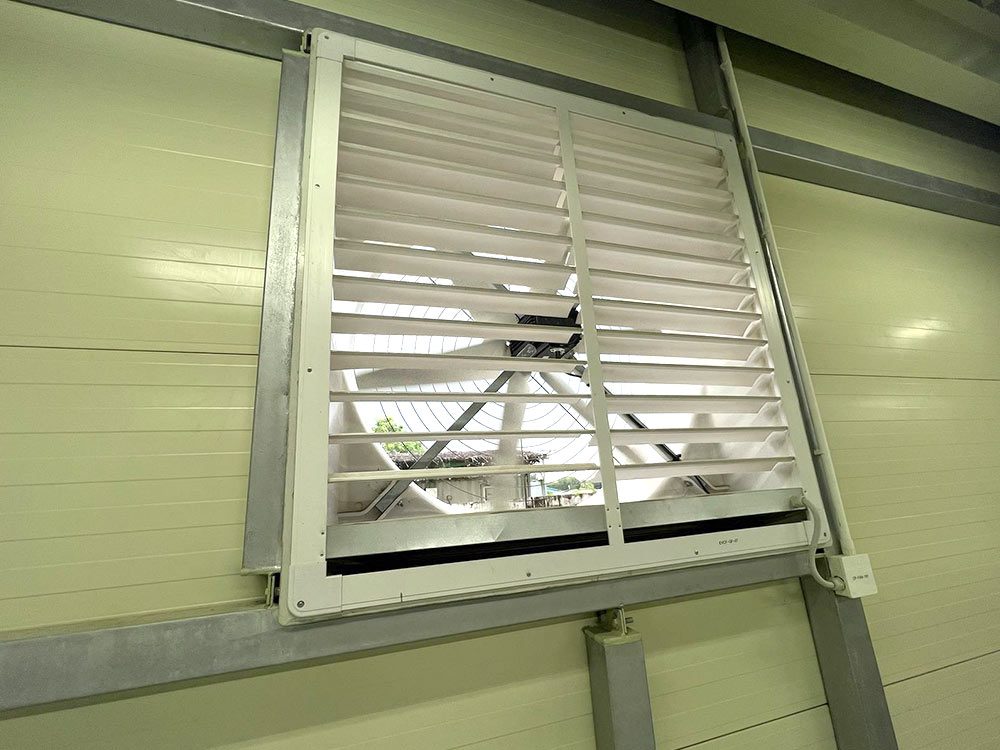
Ventilation fans are more common in spaces where air doesn’t become dangerous but still needs management.
Ventilation fans help distribute air evenly in:
Warehouses
Distribution centers
Large commercial buildings
These fans support temperature consistency and reduce stagnant air without focusing on pollutant removal.
Seeing how these fans are used in real settings helps highlight the difference.
Manufacturing facilities often use both systems:
Exhaust fans remove fumes at workstations
Ventilation fans maintain airflow throughout the building
Here, exhaust fans take priority. Removing hazardous vapors is critical, making the industrial exhaust fan a central safety component.
Ventilation fans are often more common, especially when the main concern is heat buildup rather than chemical exposure.
Exhaust fans are usually installed:
Near the source of contaminants
On walls, ceilings, or roofs
With direct duct paths to the outside
Ventilation fans are often:
Integrated into duct networks
Installed to support airflow distribution
Part of centralized systems
These design choices reflect their different purposes.
Choosing the right system depends on the environment.
Air contains hazardous substances
Heat levels are extreme
Regulatory standards require active air removal
Air quality is generally safe
The goal is comfort and circulation
Energy efficiency is a priority
In many cases, facilities use both systems together.
Exhaust fans remove air from a space, while ventilation fans manage overall airflow and air balance.
No. An industrial exhaust fan focuses on removing contaminated air, while ventilation fans focus on circulation.
Yes. Many industrial facilities use both systems together for optimal air quality.
An industrial exhaust fan is specifically designed for removing fumes and hazardous air.
They help maintain fresh airflow but are not meant to remove dangerous contaminants on their own.
Understanding the difference between exhaust and ventilation fan isn’t just a technical detail—it’s a practical necessity. Whether you’re managing an industrial facility or just trying to understand how these systems work, knowing when to use an industrial exhaust fan versus a ventilation fan makes a real difference. Each system has its role, and when they’re used correctly, they work together to create safer, healthier, and more efficient spaces.


