


Views: 279 Author: Site Editor Publish Time: 2026-04-10 Origin: Site


When summer gets serious, cooling stops being a luxury and starts feeling like survival. Whether you are trying to keep a bedroom comfortable, cool down a warehouse, or manage a larger commercial space, the real question is not just how to stay cool. It is how to do it without wasting money on the wrong system.
That is where the comparison between evaporative air coolers and traditional air conditioners comes in. Both are designed to lower temperatures, but they work in very different ways. Because of that, the better option really depends on your climate, your space, and how much you want to spend on energy and maintenance.
This guide breaks down the difference in a clear way, so you can figure out which system actually fits your needs.
The biggest difference between these two systems is the science behind them.
A traditional air conditioner uses refrigerant and a compressor to remove heat from indoor air. It cools the air, dries it out, and sends it back into the room.
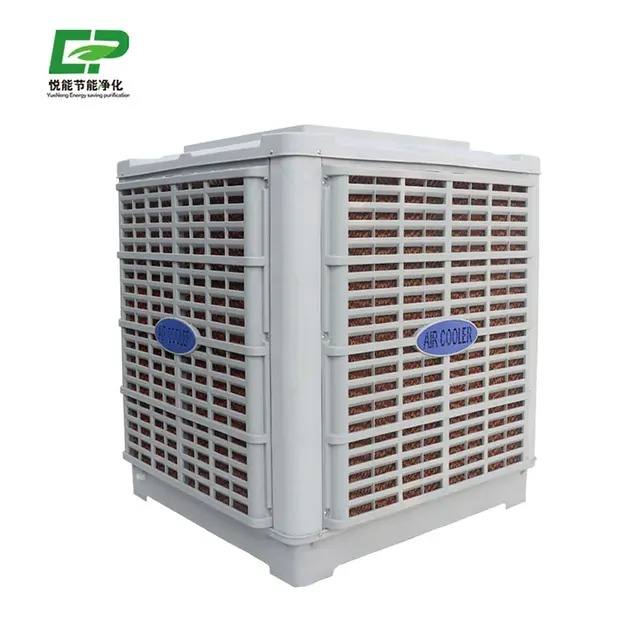
An evaporative air cooler works more naturally. It pulls warm air through water-soaked cooling pads. As the water evaporates, it absorbs heat from the air, and the fan pushes that cooler air outward. It is basically the same reason your skin feels cooler when water evaporates after a swim.
Evaporative coolers rely on three simple parts: a fan, water, and cooling pads. Warm air moves through the wet pads, evaporation happens, and the air coming out feels cooler and fresher.
Because there is no compressor involved, these systems use much less electricity than AC units. Most of the power goes to the fan motor and water pump, which makes them a strong choice for people who care about energy costs.
They also work best when air is constantly moving. That is why airflow rating, usually measured in CFM, matters so much.
Air conditioners use a closed refrigeration cycle. Instead of bringing in fresh outside air, they usually recirculate indoor air. The system removes both heat and moisture, which is why AC feels especially effective in sticky weather.
This process is powerful, but it also uses more electricity. Compressors take a lot of energy to run, and that is one reason AC systems usually cost more over time.
If there is one thing that should guide your decision, it is humidity.
Evaporative air coolers perform best in hot, dry climates. They depend on evaporation, so when the air is already full of moisture, the cooling effect drops fast. In humid areas, they can leave the room feeling damp instead of comfortable.
Air conditioners are better in humid climates because they remove moisture from the air while cooling it. That combination makes a huge difference in comfort.
If you live in a dry area, an evaporative cooler can be a great option. In places with low humidity, it can drop the temperature noticeably while also adding a little moisture to the air. That can actually make the environment feel nicer instead of overly dry.
Another plus is air quality. Since these units bring in fresh air from outside, the space does not feel sealed off and stale in the same way some air-conditioned rooms do.
Once humidity gets high, air conditioning usually wins without much debate. If the air already feels heavy and wet, adding more moisture is not going to help. AC is designed for exactly that kind of situation. It cools the room and takes the humidity down at the same time.
That is why air conditioners are usually the more reliable option in coastal cities and other humid regions.
| Feature | Evaporative Air Cooler | Traditional Air Conditioner |
|---|---|---|
| Best climate | Hot and dry | Works in all climates, especially humid ones |
| Airflow | Brings in fresh air | Recirculates indoor air |
| Humidity effect | Adds moisture | Removes moisture |
| Installation | Usually simpler | More complex |
| Energy use | Lower | Higher |
| Operating cost | Usually lower | Usually higher |
For a lot of people, this is where the decision gets real.
Evaporative coolers can use dramatically less electricity than air conditioners. Since they do not rely on a compressor, they are much cheaper to run, especially over a long summer.
That makes them appealing for larger spaces too. In workshops, warehouses, garages, greenhouses, or semi-open commercial areas, energy bills can get out of control with AC. Evaporative cooling often gives you a more affordable way to keep the environment manageable.
Air conditioners, on the other hand, are more expensive to operate because the cooling process itself requires more power. That does not mean they are a bad investment. It just means you are paying for stronger and more consistent performance, especially in difficult climates.
Maintenance is another area where the two systems feel very different.
Evaporative coolers are mechanically simpler. In most cases, maintenance involves cleaning the tank, checking the pads, and replacing parts like the cooling media when needed. A lot of users can handle that without calling a technician.
Air conditioners are more complex. Repairs often involve compressors, coils, refrigerant, and electrical components, which usually means professional service and higher maintenance costs.
If you are thinking long term, simplicity can be a real advantage.
This is one area where evaporative coolers often stand out.
Many models are portable and easy to move from one area to another. You can use them in a garage during the day, roll them onto a patio in the evening, or position them near workstations in a larger industrial setting. That kind of flexibility is hard to get with fixed AC systems.
Portable air conditioners do exist, but they still need venting through a window, which makes them less flexible than they sound.
For temporary setups, outdoor work zones, events, or leased spaces where permanent installation is not ideal, evaporative coolers are usually much easier to deal with.
Traditional AC systems are great in sealed indoor rooms. They are not nearly as effective in open or partially open environments.
In a warehouse with open loading doors, for example, cool air from an AC system can disappear almost immediately. That makes full-space cooling inefficient and expensive.
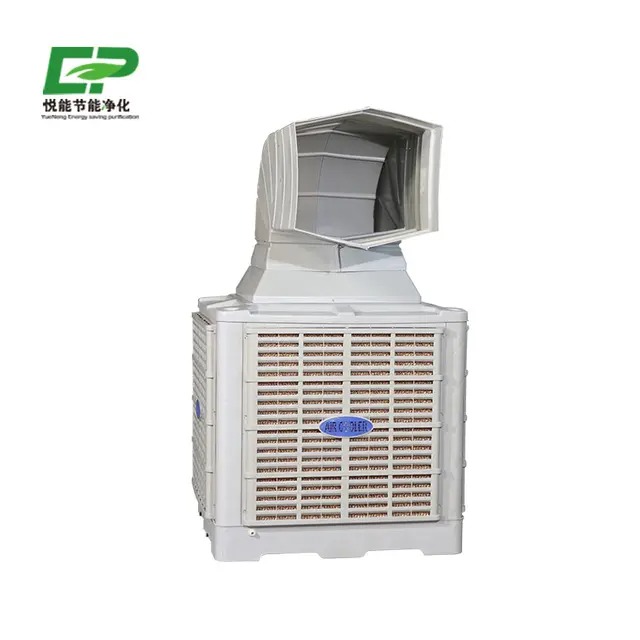
Evaporative coolers are often a better fit in those settings because they create localized cooling. Instead of trying to chill an entire huge volume of air, they push a strong stream of cooler air toward people, stations, or work zones. That makes them much more practical in large industrial spaces.
Older cooling equipment had a reputation for being loud, but that has changed a lot.
Modern evaporative coolers, especially better-designed units, can operate with fairly low noise depending on fan size and motor quality. For offices, cafes, retail spaces, or dining areas, that matters more than people sometimes expect.
Air conditioners can also be quiet, but compressor cycling often creates more noticeable sound changes. In spaces where consistent background noise matters, product design makes a big difference either way.
Sustainability is a bigger factor now than it used to be, and cooling systems are part of that conversation.
Evaporative coolers are generally more environmentally friendly because they use water instead of chemical refrigerants. They also consume less electricity, which helps reduce overall energy demand.
Traditional air conditioners rely on refrigerants and higher power consumption. Modern systems are better than older ones, but they still tend to have a larger environmental footprint than evaporative cooling.
For businesses working toward energy-efficiency goals or greener operations, that can be an important point.
Installation can also shape the decision.
Central AC and mini-split systems usually require professional installation, wiring, and in some cases ductwork or wall penetration. That is a bigger upfront commitment.
Evaporative coolers are often much simpler. Portable units are usually close to plug-and-play. Even fixed systems tend to be easier to install because they do not involve refrigerant lines.
If you need something fast, flexible, and lower commitment, evaporative cooling has an obvious advantage.
How well an evaporative cooler performs depends heavily on the starting conditions.
Here is a general idea of what happens at the same outdoor temperature but with different humidity levels:
| Ambient Temperature | Relative Humidity | Estimated Temperature Drop | Approximate Output Air Temperature |
|---|---|---|---|
| 37.78°C | 10% | -6.67°C to -3.89°C | Around 23.89°C to 26.67°C |
| 37.78°C | 30% | -11.11°C to -9.44°C | Around 29.44°C to 31.11°C |
| 37.78°C | 50% | -14.44°C to -13.33°C | Around 33.33°C to 34.44°C |
| 37.78°C | 70% | -16.67°C to -15.56°C | Around 35.56°C to 36.67°C |
This makes the pattern pretty clear. In dry air, evaporative cooling can feel impressive. In humid air, the benefit becomes much smaller.
Air conditioning is different because it can maintain a much more stable indoor target temperature regardless of outdoor humidity. That is why it is still the standard for places like labs, server rooms, medical settings, and tightly controlled indoor environments.
If you are deciding between the two, these questions make the answer easier:
What is your average humidity level?If it is regularly high, AC is usually the better choice.
Is the space open or enclosed?Open and semi-open spaces are often better suited to evaporative cooling. Sealed indoor rooms usually favor AC.
How important is energy savings?If lower operating cost matters a lot, evaporative cooling has a major advantage.
Do you care about fresh airflow?If bringing in outside air is important, evaporative coolers have an edge.
Do you need precision cooling?If the temperature must stay tightly controlled, air conditioning is more dependable.
The evaporative air cooler versus air conditioner debate is not really about which system is universally better. It is about choosing the one that makes sense for your environment.
If you are dealing with dry heat, large open areas, or rising electricity costs, an evaporative air cooler can be a smart, efficient, and practical solution. It is easier to maintain, cheaper to run, and often more flexible in terms of installation and mobility.
If you live in a humid climate or need reliable indoor temperature control, a traditional air conditioner is still the stronger option. It cools more consistently, removes moisture, and performs better when comfort depends on precise control.
In the end, the best system is the one that matches the space you actually have, not just the one that sounds more powerful on paper.
Q1: Can I use an evaporative air cooler indoors?
Yes, but the room needs ventilation. A window or door should stay slightly open so fresh air can move through the space and excess humidity does not build up.
Q2: Is the water tank a health concern?
It can be if the unit is not cleaned properly. Regular maintenance matters. The tank and pads should be cleaned on schedule to prevent bacteria, algae, or unpleasant odors.
Q3: How much water does an evaporative cooler use?
That depends on the size of the unit, the temperature, and the humidity. On very hot and dry days, larger models can use several gallons per hour.
We have spent years focused on industrial cooling and practical climate-control solutions. Our manufacturing facility is built around producing high-performance evaporative air coolers that are designed for durability, efficiency, and real-world use.
With advanced production equipment, automated assembly lines, and a strong R&D team, we are able to develop systems that balance strong airflow, lower energy consumption, and reliable long-term performance. We pay close attention to fan design, motor efficiency, cooling pad quality, and overall structural durability, especially for demanding commercial and industrial applications.
Our goal is not just to produce cooling equipment, but to deliver solutions that help partners reduce operating costs, improve comfort, and meet modern expectations for energy efficiency and environmental responsibility.


