


Views: 336 Author: Site Editor Publish Time: 2026-04-27 Origin: Site


When a warehouse or production floor starts heating up, cooling is not just about comfort. It affects how people work, how machines perform, and how smoothly the whole operation runs. That is why more businesses are looking at industrial air coolers as a practical alternative to traditional air conditioning.
The reason is pretty simple. Standard AC systems are built for closed spaces, but many industrial environments are not fully sealed. Doors stay open, equipment generates heat, and air needs to keep moving. In spaces like that, industrial air coolers often make a lot more sense. Instead of relying on refrigerants and compressors, they use water, airflow, and evaporation to bring temperatures down in a much more efficient way.
So how do they actually work? Once you understand the basic idea, the whole system starts to feel pretty straightforward.
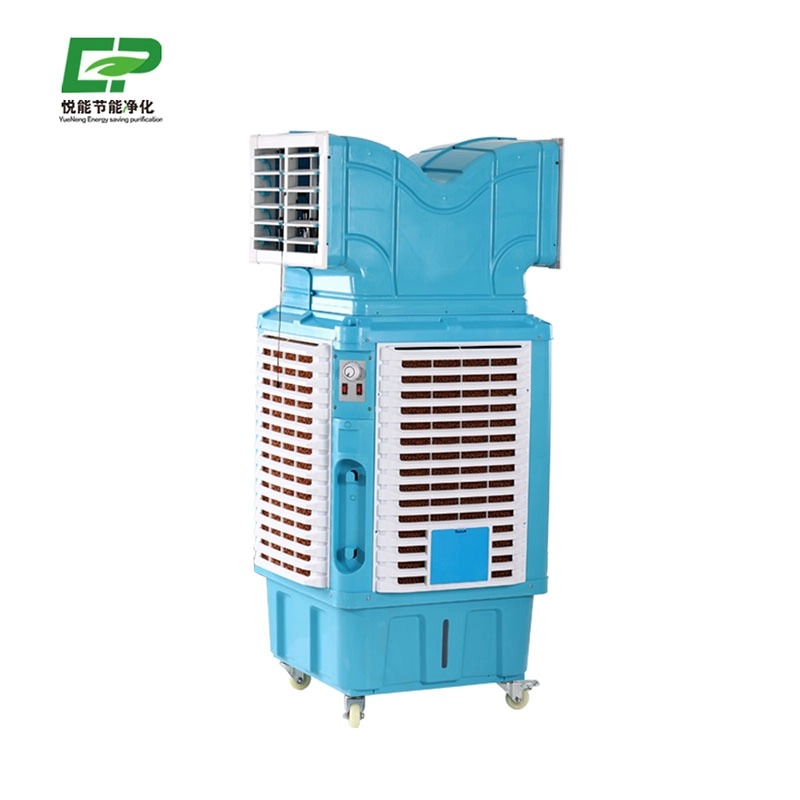
At the center of an industrial air cooler is a simple process: evaporation.
If you have ever stepped out of a pool on a windy day and suddenly felt cold, you already know how it works. As water evaporates, it absorbs heat. That same idea is what makes an evaporative cooler effective.
Inside the unit, warm air passes through pads that are kept wet by a water distribution system. As the air moves through those damp pads, some of the water evaporates and pulls heat out of the air. The result is cooler air being pushed into the space.
What makes this system appealing is that it does not need a compressor or refrigerant to get the job done. It uses a natural process, which is one reason it can be much more energy-efficient than traditional air conditioning.
Industrial air coolers perform best when the air is dry. That is because dry air has more capacity to absorb moisture, which means evaporation happens more easily and the cooling effect becomes stronger.
In hot, low-humidity climates, the temperature drop can be pretty impressive. In areas with moderate humidity, the system can still help a lot by pushing a steady flow of cooler air through the space.
In very humid conditions, though, performance becomes less dramatic. The cooler can still improve airflow and make people feel better, but it will not deliver the same drop in temperature as it would in a dry environment. That is why climate matters so much when choosing this type of system.
Even though the cooling process sounds technical, the actual structure of the machine is not overly complicated. Most industrial air coolers rely on a few key components working together.
These are usually made from cellulose or similar materials and shaped to maximize contact between air and water. Their job is to create as much evaporative surface area as possible.
The fan is what keeps everything moving. It pulls hot air into the unit and pushes the cooled air back out. In industrial settings, airflow matters a lot, so these fans are built to move large volumes of air.
The pump pulls water from the tank or supply line and spreads it across the cooling pads. If the pads are not evenly wet, the system cannot cool efficiently.
The body of the machine protects the internal components. Industrial models are usually built from stronger materials like UV-resistant plastic, powder-coated metal, or galvanized steel so they can handle rough environments.
Not all cooling pads perform the same way. Thicker pads usually mean better cooling because they give the air more time to interact with the wet surface as it moves through the unit.
That longer contact time improves saturation efficiency, which basically means the outgoing air can be cooled more effectively. In industrial systems, that difference matters. A unit with better pads will usually deliver stronger and more consistent performance than a cheaper model built with thinner material.
One of the biggest factors in industrial cooling is airflow. Cooling a large facility is not just about lowering temperature. It is also about moving enough air to prevent heat from sitting in one place.
That is where CFM comes in. CFM stands for cubic feet per minute, and it tells you how much air the unit can move. A higher CFM rating means stronger airflow and better coverage.
In a factory or warehouse, high airflow helps push hot, stale air out while distributing cooler air across the space. Without strong airflow, even a decent cooling process will not feel effective in a large area.
People usually assume that more airflow automatically means more noise, but that is not always true.
Modern industrial air coolers are often designed with better fan blades and more efficient motors, which helps reduce turbulence and vibration. That means they can move a lot of air without sounding overwhelming.
This matters more than it seems. In work environments, people need to hear instructions, machines, alarms, and each other. A cooling system that is too loud can quickly become annoying or even unsafe. So low-noise performance is not just a nice extra. In some spaces, it is a real requirement.
Some industrial air coolers are portable, while others are mounted on rooftops and connected to duct systems. In those setups, the unit needs enough static pressure to push cooled air through the ducting without losing effectiveness before it reaches the workspace.
That is why industrial models use more powerful motors and more durable fan systems. The goal is not just to cool the air, but to deliver that cooling where it actually needs to go.
An industrial air cooler depends on water. Without it, the machine is basically just a fan.
That is why good water management matters so much. Many heavy-duty units are connected directly to a water line, which allows the system to refill automatically as needed. Portable models often include large internal tanks and low-water protection systems that shut off the pump if the water level drops too far.
That kind of protection helps prevent damage and keeps the unit running more reliably during long shifts or hot days.
As water evaporates, it leaves minerals behind. Over time, those minerals can build up on the pads and inside the system. If that buildup gets too heavy, airflow drops and cooling performance gets worse.
That is why many industrial coolers include a bleed-off or drainage feature. It removes some of the mineral-heavy water and replaces it with fresh water, which helps keep the pads cleaner and the system working properly.
It may sound like a small detail, but it makes a big difference over time. Better water maintenance usually means better cooling and longer equipment life.
One of the biggest reasons companies choose industrial air coolers is energy cost.
Traditional air conditioning systems use compressors, and compressors consume a lot of electricity. Industrial air coolers do not need that kind of power-hungry setup. They mostly rely on a fan motor and a water pump, which means energy use is much lower.
That makes them especially attractive for large spaces. Cooling a huge warehouse with traditional AC can get expensive fast. An evaporative system gives businesses a way to improve comfort without driving energy bills through the roof.
Installation and maintenance can also be simpler. Since there are no refrigerant lines or high-pressure systems, setup is usually more straightforward, and routine care is easier to manage.
Another major difference between industrial air coolers and standard AC is how they handle airflow.
Traditional air conditioning usually recirculates indoor air. Industrial air coolers bring in fresh outside air, cool it, and push it through the building. In open or ventilated environments, that approach often feels more natural and more practical.
That constant air exchange can also help remove heat, fumes, dust, and stale air from the workspace. In many industrial settings, that is a real advantage, not just a comfort feature.
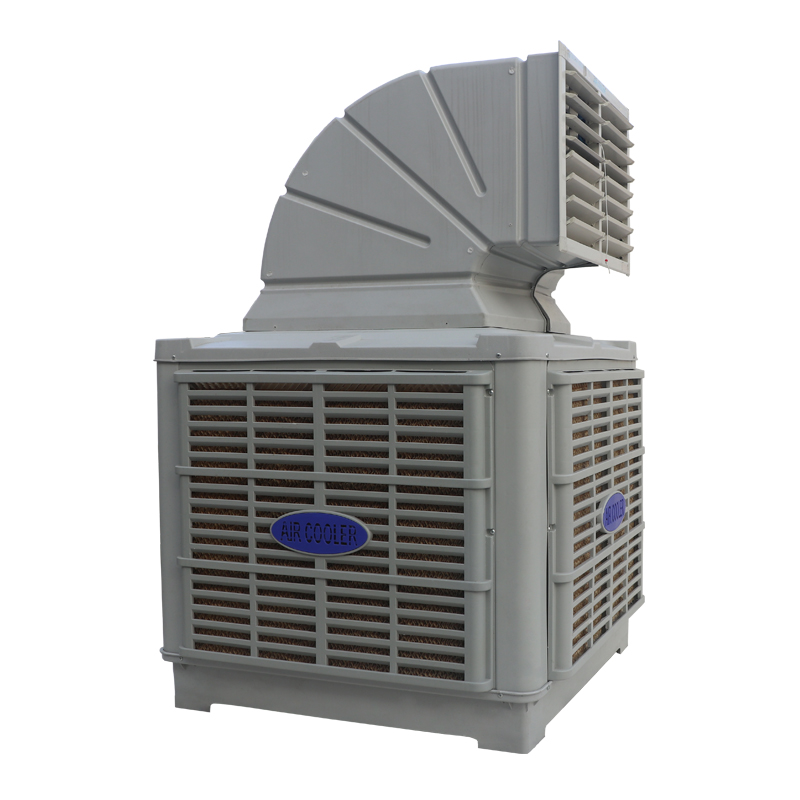
Industrial air coolers are not one-size-fits-all. Some businesses need portable spot cooling, while others need a full-building solution.
Portable coolers are useful when heat is concentrated in one area or when the layout changes often. If a workstation moves, the cooler can move too. That flexibility is helpful in workshops, event spaces, or production lines that shift over time.
For larger facilities, fixed installations are usually the better option. Rooftop systems can draw in hot outside air, cool it, and deliver it through the building in a more consistent way. They are especially effective when combined with open doors, windows, or exhaust paths that allow warm air to leave.
Industrial settings are rough on equipment. Heat, dust, vibration, and constant use can wear down consumer-grade products pretty fast.
That is why industrial air coolers are built differently. Better models use stronger housings, sealed motors, reinforced fan systems, and materials that can handle long-term exposure to sun, moisture, and heavy use.
For rooftop units, UV resistance matters a lot. Cheap plastic can crack after a couple of seasons in direct sunlight, so high-quality materials are important if you want the unit to last.
One thing people do not always realize is that cooling pads can also help clean the air a little. As outside air passes through the wet media, dust and particles can get trapped before the air is sent into the workspace.
Some systems even include pre-filters for larger debris. That can be useful in facilities where the air contains wood dust, packaging particles, or other common industrial pollutants.
It is not the same as a dedicated filtration system, but it definitely adds value.
Industrial air coolers are getting more advanced. A lot of newer systems include sensors, remote controls, and centralized management options that make operation much easier.
Humidity and temperature sensors can adjust performance automatically depending on outdoor conditions. If the air becomes too humid for effective evaporation, the system can switch modes or increase airflow to avoid making the space feel sticky.
For facilities running multiple units, centralized controls also save time. Managers can monitor performance, adjust settings, and catch maintenance issues before they turn into bigger problems.
Industrial air coolers work by using one of the simplest cooling principles out there: evaporation. Warm air moves through wet pads, heat gets absorbed, and cooler air is pushed into the space. That process may sound basic, but in the right environment, it is incredibly effective.
For warehouses, factories, workshops, and other large ventilated spaces, this kind of system can offer a strong balance of cooling performance, lower energy use, easier maintenance, and better airflow. It is not the right solution for every climate or every building, but when the conditions line up, it is a smart and practical choice.
Once you understand how the system works, it becomes a lot easier to see why so many businesses are moving in this direction.
Does an industrial air cooler still work in humid weather?
Yes, but the cooling effect is usually weaker. Even then, strong airflow can still make the space feel more comfortable.
How much water does a large unit use?
That depends on the size of the cooler, the heat, and the humidity. Bigger units in dry conditions can use a substantial amount of water, especially during long operating hours.
Can I use one indoors without opening anything?
Not really. These systems work best when there is an exhaust path for warm, humid air to leave. Without ventilation, performance drops and the space can start to feel muggy.
We focus on building industrial air coolers that are designed for real working environments, not just showroom conditions. Our factory uses advanced production equipment, strict quality control, and detailed testing processes to make sure each unit delivers reliable airflow, solid durability, and consistent cooling performance.
From fan balance and motor stability to housing strength and pad efficiency, every part of the system is developed with long-term use in mind. Whether the application is a warehouse, workshop, logistics center, or commercial facility, our goal is to provide cooling solutions that are efficient, dependable, and built to last.


