


Views: 135 Author: Site Editor Publish Time: 2026-02-10 Origin: Site


Choosing the right industrial exhaust fan can feel overwhelming at first. There are tons of models, specs, and opinions out there, and if you’re not already familiar with ventilation systems, it’s easy to get lost in the details.
Whether you’re looking at a basic exhaust fan for a workshop or selecting industrial exhaust fan equipment for a factory, greenhouse, or farm, the core idea is the same: you want a system that moves air effectively, safely, and efficiently. This article works as a practical exhaust fan buying guide, breaking down what actually matters when making a decision and why.
By the end, you should have a solid understanding of how to choose an industrial exhaust fan that fits your needs—and feel confident explaining your choice to someone else.
An exhaust fan isn’t just a box with spinning blades. The right industrial exhaust fan directly affects air quality, temperature, humidity, safety, and even long-term operating costs. A poorly chosen fan can waste energy, wear out quickly, or fail to ventilate a space properly.
In industrial environments, the stakes are even higher. Incorrect airflow can lead to heat stress, dust buildup, chemical exposure, or equipment damage. That’s why selecting industrial exhaust fan systems is usually treated as a serious engineering decision rather than a casual purchase.
Even in smaller spaces, the wrong exhaust fan can mean:
Persistent odors
Excess moisture and mold
Loud operation
High electricity bills
So choosing carefully really does matter.
One of the biggest mistakes people make is assuming all exhaust fans work the same way. They don’t.
These are typically used in bathrooms, kitchens, and small utility rooms. They’re designed for: short operating times, low to moderate airflow, quiet operation. They’re not built to handle harsh conditions or continuous use.
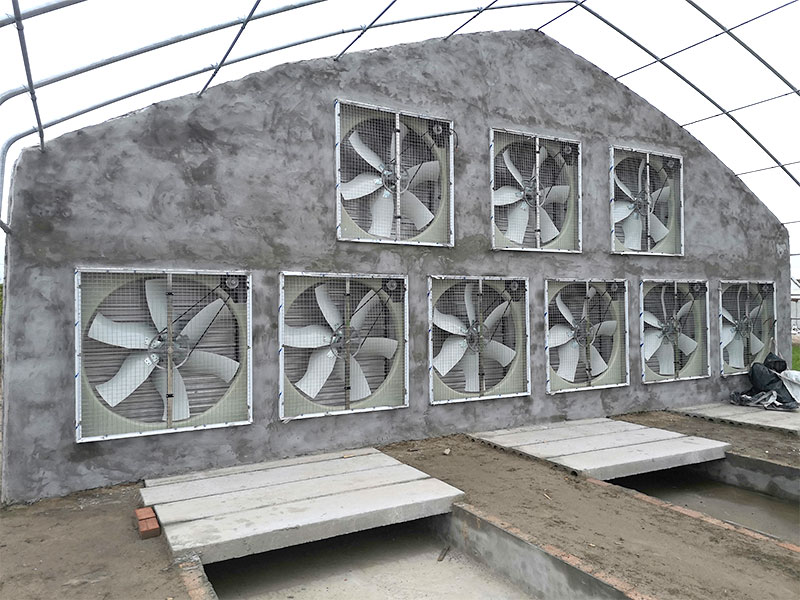
An industrial exhaust fan is designed for much tougher environments, such as: factories, warehouses, greenhouses, livestock buildings, workshops. When selecting industrial exhaust fan equipment, you’re looking at higher airflow, stronger materials, and motors that can run for long hours without overheating.
The size of the space you’re ventilating is one of the most important factors in choosing an exhaust fan.
To estimate your needs, you generally start by calculating room volume: Length × Width × Height = Volume
Larger volumes require higher airflow capacity, usually measured in CFM (cubic feet per minute) or m³/h.
If an industrial exhaust fan is too small, it won’t exchange air fast enough. If it’s too large, it may waste energy and create unnecessary noise or drafts.
Airflow is the heart of any industrial exhaust fan decision.
Many ventilation systems are designed around ACH, which measures how many times the air in a space is replaced per hour. Different environments require different ACH levels:
Light-duty spaces: lower ACH
Industrial workshops: moderate to high ACH
Chemical or dusty environments: very high ACH
This is a key concept when selecting industrial exhaust fan systems, especially in regulated industries.
Not all exhaust fans are built the same, and the type you choose depends on your application.
Axial fans move air in a straight line, parallel to the fan shaft. They are:
Simple in design
Efficient for high airflow, low resistance situations
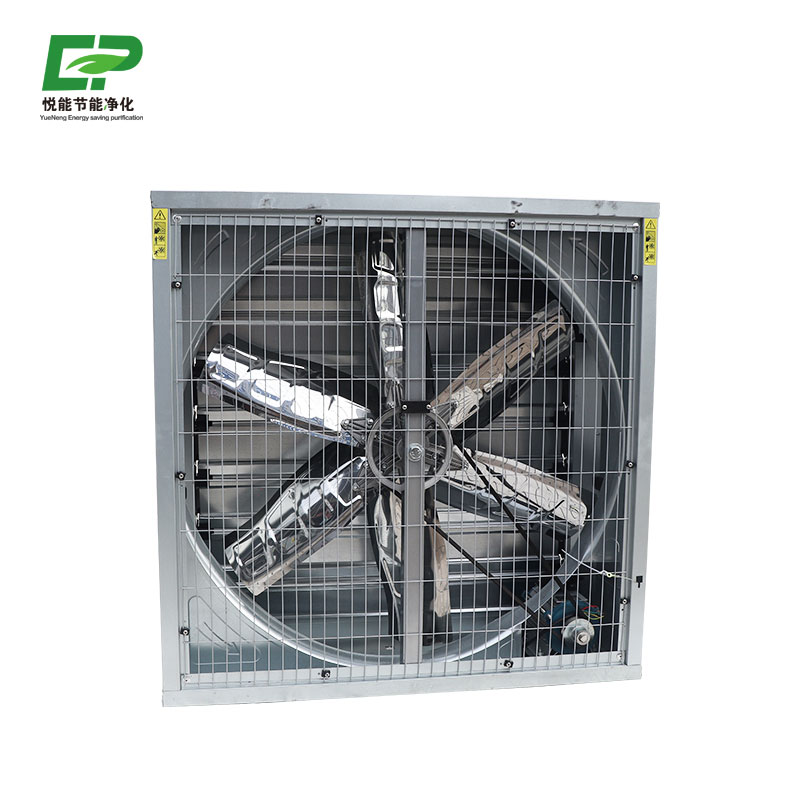
Common in wall-mounted industrial exhaust fan setups
They’re a popular choice in large open spaces.
Centrifugal fans pull air in and push it outward at a right angle. They are:
Better for high-pressure systems
Ideal for long or complex ductwork
Often used in demanding industrial ventilation
In many exhaust fan buying guide comparisons, centrifugal fans are chosen when resistance is a major factor.
The environment plays a huge role in choosing the right industrial exhaust fan.
High-temperature environments require fans with heat-resistant motors and materials.
In greenhouses, aquaculture, or coastal areas, moisture and corrosion resistance are critical. Galvanized steel, stainless steel, or coated components are often preferred.
Dusty or chemically active environments require sealed motors and easy-to-clean designs. This is a major consideration when selecting industrial exhaust fan equipment for factories or processing plants.
Noise might not seem like a big deal until you’re around a loud fan for hours.
Residential spaces prioritize quiet operation
Industrial spaces may tolerate higher noise but still need safe levels
Choosing a properly sized industrial exhaust fan often reduces noise, since an oversized fan running slowly can be quieter than a small fan running at full speed.
Energy efficiency matters more than ever, especially for systems that run daily or continuously.
High-efficiency motors use less electricity for the same airflow.
Many modern industrial exhaust fan systems support variable speed drives, allowing airflow to adjust based on real needs.
Over time, energy-efficient choices significantly lower operating costs, which is why they’re emphasized in any serious exhaust fan buying guide.
A good rule of thumb in any exhaust fan buying guide is that there’s no universal “best” fan—only the best fan for a specific job.
For example:
A greenhouse values airflow and corrosion resistance
A factory may prioritize dust handling and durability
A livestock building focuses on continuous airflow and reliability
Understanding your application helps narrow down choices quickly.
It’s tempting to choose the cheapest option, but that often leads to higher costs later.
A higher-quality industrial exhaust fan may cost more upfront but:
Lasts longer
Uses less energy
Requires fewer repairs
When selecting industrial exhaust fan equipment, value almost always beats lowest price.
Here’s a simplified way to approach choosing the right fan:
Define the problem (heat, moisture, fumes, dust)
Measure the space
Determine airflow requirements
Choose the fan type
Consider environment and durability
Evaluate energy efficiency
Plan installation and maintenance
This step-by-step mindset keeps the exhaust fan buying guide process manageable.
Airflow capacity matched to the space and application is usually the most critical factor.
If the space is large, runs for long hours, or has heat, dust, or fumes, an industrial exhaust fan is usually necessary.
It can be, but breaking it down into airflow, environment, and installation needs makes it much easier.
Yes. Over time, lower energy consumption often saves more money than the higher initial price.
Absolutely. Poor airflow, excessive noise, high energy use, and equipment failure are common results of poor fan selection.
Choosing the right industrial exhaust fan isn’t about memorizing specs—it’s about understanding the space, the problem, and the long-term impact of your decision. With the right approach, selecting industrial exhaust fan systems becomes a logical process instead of a confusing one. Hopefully, this exhaust fan buying guide makes that process clearer and gives you the confidence to choose wisely.


