


Views: 149 Author: Site Editor Publish Time: 2026-02-02 Origin: Site


Exhaust fans are everywhere—you’ve seen them in bathrooms, kitchens, workshops, and even massive factories. Most people take them for granted, but they’re doing an important job: moving air out of a space so fresh air can take its place. Once you start thinking about the exhaust fan working principle and how these devices operate in both homes and industrial settings, it actually becomes pretty fascinating.
In this guide, I’ll walk you through everything from the basics of what an exhaust fan is to the inner workings of larger industrial systems. You’ll also learn why they’re so essential in certain environments and how their mechanisms differ depending on the size and purpose. By the end, you’ll be able to confidently explain how exhaust fans work—and maybe even impress a friend or two.
At its core, an exhaust fan is a machine designed to pull old, stale, or contaminated air out of an indoor space and push it outside. The point is to get rid of air that might be humid, smelly, dusty, smoky, or just plain uncomfortable. Once that air is removed, fresh outdoor air can enter and replace it naturally through other openings like windows or gaps in the building structure.
You might see exhaust fans in places like:
Bathrooms (to control moisture)
Kitchens (to deal with cooking odors and heat)
Garages (to remove car fumes)
Workshops and industrial areas (to manage dust, heat, smoke, or chemical fumes)
They might look simple, but they play a critical role in maintaining comfort and health indoors.
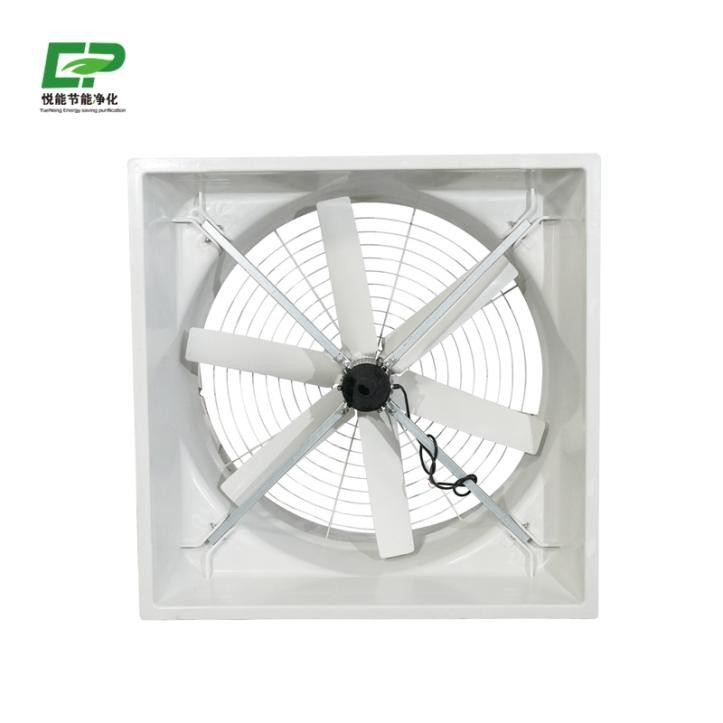
Here’s the core idea behind how exhaust fans work: they create a pressure difference between the inside of a room and the outside environment. When the fan runs, it pushes air out, which lowers the air pressure inside the room. Lower pressure means that air from outside naturally flows in to balance things out. When this cycle continues, stale indoor air is constantly replaced by fresh outdoor air.
Let’s simplify it with an everyday image: imagine you’re sucking air out of a balloon with a straw. As you remove air, the pressure inside drops, and air from all around rushes in through any opening to fill the space. That’s pretty much what happens with exhaust fans—they lower the internal air pressure so outside air replaces the exhausted air.
The motor is the brain of the fan—it uses electrical energy to spin the blades at high speed.
When the blades spin, they pull air from inside and push it toward the outside. The faster and more curved the blades are, the more air they can move.
The housing directs air flow in a controlled direction, usually through a vent or duct.
These components give the air a pathway to travel from inside to outside.
All together, these parts create a simple but effective flow: air is drawn in, pulled through the blades, and pushed out of the space.
Not all exhaust fans are created equal. Different designs are better suited for different jobs.
Axial fans move air along the same axis that the blades spin. Think of them like desk fans but designed to move air out of a space. These fans are good for moving large amounts of air at low pressure, which is perfect for basic home ventilation.
Centrifugal fans work differently. They pull air in toward the center and then spin it outward using centrifugal force. That creates higher pressure, which makes them better for more demanding jobs—like pushing air through long ducts or handling heavier loads of dust or fumes in industrial settings.
Each type has its advantages. Axial fans are simple and efficient for open spaces, while centrifugal fans handle resistance and pressure better.
When we talk about industrial fans, we’re talking about fans built to handle big jobs in demanding environments. They’re not just bigger versions of home exhaust fans—they’re engineered to meet stricter requirements, especially where safety and air quality are regulated.
Industrial exhaust fans are robust, heavy-duty machines that can:
Move a lot more air per minute (high CFM)
Deal with hot temperatures and chemical vapors
Work with complex duct systems
Run continuously without overheating
These systems don’t just push air out—they’re often integrated into larger ventilation networks designed for specific industrial processes.
In factories or warehouses, exhaust fans work alongside intake vents, ducts, filters, and sensors. Together, these systems:
Capture contaminated air at the source
Transport it safely through ducts
Remove particulates with filters
Expel the air outside
This bigger system ensures that harmful gases and fine dust don’t spread throughout a workspace.
It’s not enough just to have an exhaust fan—you need to consider how well it performs.
Different blade shapes affect airflow efficiency. Curved and aerodynamic blades can push air more smoothly and quietly.
A stronger motor moves blades faster and can handle more airflow, especially in larger spaces.
Where you install your fan matters. For instance, placing a fan higher in a room helps remove hot air that naturally rises.
Long or narrow ducts make it harder for air to travel out, so fans need enough power to overcome the resistance.
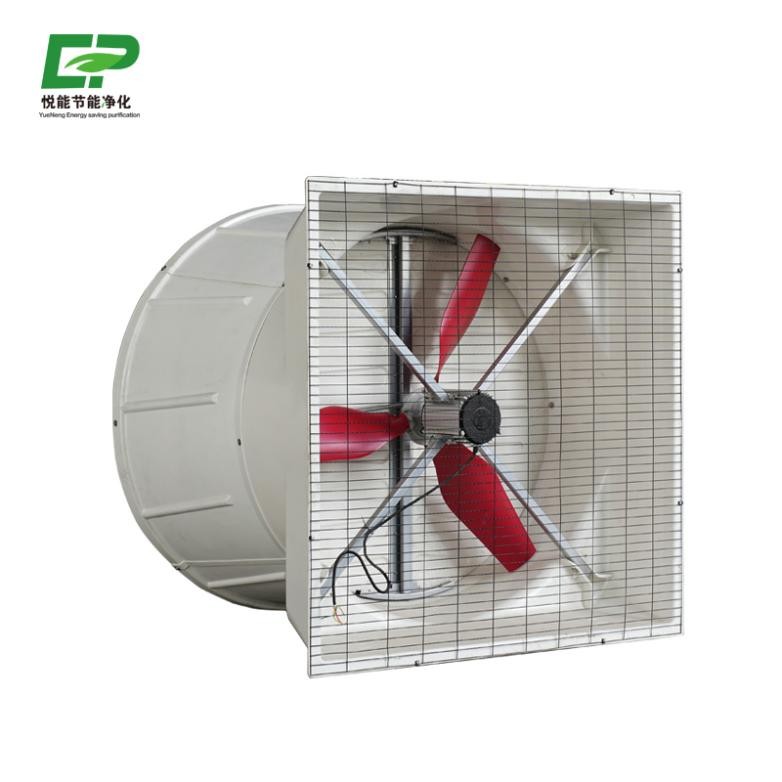
An exhaust fan pulls stale, humid, or contaminated air out of a space and pushes it outside, helping improve indoor air quality.
It works by creating a pressure difference—drawing air out of a space so outside air naturally flows in to replace it.
Yes. Industrial exhaust fans are larger, more powerful, and built to handle tougher environments and larger volumes of air.
Definitely. By removing moist air, exhaust fans help reduce humidity and prevent issues like mold growth.
It depends on use, but regular cleaning and annual inspections are good habits to keep fans running efficiently.


