


Views: 0 Author: Site Editor Publish Time: 2026-10-20 Origin: Site


Hot manufacturing environments can make daily work uncomfortable and demanding. Poor airflow often makes the problem worse. An Industrial Air Cooler can improve airflow and reduce heat discomfort in suitable factories. This guide explains its benefits, applications, and selection tips for better workplace comfort.
Production machinery, motors, ovens, and manufacturing processes can create localized hot spots. These areas may become uncomfortable even when the rest of the factory feels acceptable. An industrial air cooler can supply moving, cooled air to selected work zones. This helps reduce heat discomfort when the equipment and surrounding ventilation are properly designed.
Evaporative cooling systems draw air through water-saturated cooling pads. As water evaporates, it absorbs heat from the passing air. The fan then delivers the cooled air into the workspace. The actual temperature reduction depends on outdoor conditions, especially relative humidity. In dry climates, evaporative cooling can provide a more noticeable effect than in humid environments.
Large workshops often contain production lines, storage racks, and separate workstations. Walls, machinery, and equipment can interrupt natural airflow. A properly positioned industrial air cooler helps move air toward occupied areas and reduces stagnant zones. However, the rated airflow alone cannot guarantee even cooling throughout the building.
Facility managers should identify worker locations and major heat sources before installing equipment. They should also plan suitable exhaust openings to let warm, humid air escape. This supply-and-exhaust arrangement supports continuous airflow and helps prevent moisture from accumulating indoors.
A more comfortable workplace can help employees remain focused during demanding shifts. However, cooling equipment alone cannot eliminate occupational heat risks. Employers should also provide drinking water, suitable rest breaks, and heat-stress procedures. These measures are particularly important during physically demanding work or extreme heat.
Tip: Place temperature and humidity sensors near occupied workstations. Compare readings before and after installation to assess actual improvements.

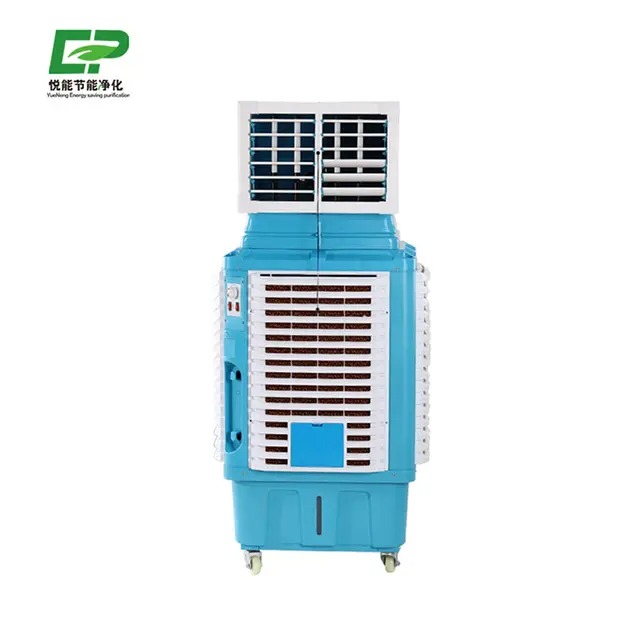
An evaporative air cooler uses a fan, cooling pads, and a water circulation system. Water flows over the pads while incoming air passes through their wet surfaces. Evaporation removes heat from the air, which then enters the factory. The system needs a reliable water supply and clean pads to maintain consistent operation.
Dust, mineral deposits, and uneven water distribution can reduce cooling performance. Regular inspections help identify clogged pads, blocked pipes, and pump problems. Businesses should also follow appropriate cleaning and water-management procedures to maintain equipment hygiene.
Airflow capacity is an important selection factor for large workshops. The correct capacity depends on floor area, ceiling height, heat generation, occupancy, and the required air exchange. Too little airflow may leave workers in hot zones. Excessive airflow can increase operating costs or create uncomfortable drafts.
Yueneng offers several industrial air cooler configurations for different workspace requirements. For example, its published YNC-180 model provides an airflow rating of 18,000 m³/h and a rated power of 1.1 kW. The product information also lists water consumption of approximately 20–25 kg/h. These figures provide a starting point for planning, but actual performance depends on installation and operating conditions.
Businesses requiring higher airflow can review the 4 kW, 40,000 m³/h industrial evaporative air cooler as another option. Buyers should confirm the latest specifications, coverage recommendations, and electrical requirements with the supplier before ordering.
An industrial air cooler's operating costs include electricity, water, cleaning, and replacement parts. Motor power matters, but it does not tell the full story. A higher-capacity unit may serve a larger space, while several smaller units may provide better control across separate work zones.
Businesses should estimate daily operating hours and annual maintenance costs before comparing equipment. They should also evaluate whether the proposed system can deliver sufficient airflow without unnecessary energy use.
Tip: Treat manufacturer coverage figures as preliminary estimates. Confirm cooling requirements through a site assessment before finalizing equipment quantities.
Metalworking facilities may experience heat from machining equipment, production motors, and other industrial processes. An industrial air cooler can help improve comfort in suitable open or semi-open work areas. Its effectiveness depends on the heat load, ventilation layout, and outdoor humidity.
Dust and airborne contaminants also require attention. A standard evaporative cooler should not replace dedicated extraction equipment for welding fumes, hazardous dust, or chemical vapors. Facilities should assess these risks separately and maintain appropriate industrial ventilation.
Packaging lines, assembly stations, and warehouses often contain large occupied areas. Cooling every corner may be unnecessary when most workers remain in defined zones. A targeted airflow strategy can direct cooled air toward workstations where employees spend the most time.
Portable equipment may suit temporary work areas or changing production layouts. Fixed systems may work better when cooling demand remains stable throughout the year. For example, Yueneng's portable small air cooler for warehouses and workshops provides an option worth evaluating for flexible applications. Buyers should confirm its actual capacity and suitability for the intended environment.
Some factories need continuous air movement because of internal heat, worker activity, or production conditions. In these settings, industrial air coolers can operate alongside exhaust fans. The cooler supplies air, while the exhaust system helps remove warm and humid air.
The balance between supply and exhaust matters. Poorly planned airflow may create dead zones or pull contaminants through occupied areas. Managers should assess air pathways, openings, and worker positions before installation.
An evaporative air cooler uses water evaporation to lower incoming air temperature. Conventional air conditioning uses a refrigeration cycle to remove heat and usually offers more precise temperature control. These systems therefore serve different operational needs.
Evaporative cooling generally performs best in hot, dry conditions. Its cooling effect becomes less pronounced as outdoor humidity rises. Conventional air conditioning may suit spaces requiring stable temperature and humidity, including certain sensitive production areas.
Evaporative air coolers may use less electricity than comparable refrigeration-based cooling systems because their cooling process differs. However, actual savings depend on the equipment, operating schedule, local climate, and required cooling output. Water use and maintenance must also be included in the comparison.
Factor | Industrial air cooler | Conventional air conditioning |
|---|---|---|
Cooling method | Water evaporation | Refrigeration cycle |
Humidity impact | Performance declines in humid conditions | Can provide humidity control |
Ventilation | Usually requires fresh-air entry and exhaust | Often recirculates indoor air |
Main operating inputs | Electricity and water | Electricity and, where applicable, refrigerant service |
Best-fit applications | Suitable open or well-ventilated spaces | Spaces needing tighter environmental control |
Factories should begin by identifying their primary problem. If workers need relief in a large, well-ventilated workshop, evaporative cooling may be worth evaluating. If a process requires tightly controlled temperature or humidity, conventional air conditioning may be more suitable. Some facilities may benefit from a hybrid approach.
Tip: Compare solutions under the same operating conditions. Include electricity, water, installation, maintenance, and the required indoor comfort level.
Start by measuring the floor area and ceiling height. Then identify the number of workers, heat-producing equipment, and areas requiring the most cooling. These details help determine the necessary airflow and equipment quantity.
Do not choose a unit based on floor area alone. Two factories of equal size may have very different cooling needs. A facility with heavy machinery and limited ventilation may require a different layout from a warehouse with fewer heat sources.
Check typical outdoor temperature and relative humidity during the hottest working hours. These conditions influence evaporative cooling performance. Confirm that the building also has sufficient openings or exhaust equipment to remove humid air.
Air quality requires separate consideration. Factories handling chemicals, fine powders, or process fumes need suitable extraction and filtration strategies. The selected cooling equipment must not interfere with those controls.
Review rated power, airflow, water consumption, noise, voltage, and outlet dimensions. Confirm whether the site supports wall, window, or other mounting arrangements. Check drainage access and allow sufficient space for inspection and cleaning.
For example, Yueneng lists a 1.1 kW industrial evaporative air cooler rated at 18,000 m³/h for workshop applications. Its published specifications can help buyers establish an initial comparison, but the final selection should follow a site-specific assessment.
Reliable operation depends on the fan, motor, water system, cooling pads, and electrical components. Ask suppliers about warranties, replacement parts, maintenance requirements, and technical support. Confirm customization options when standard dimensions or electrical configurations do not fit the site.
Cooling pads collect dust and mineral deposits during operation. These materials can restrict airflow and affect water distribution. Inspect pads, pumps, filters, and pipes according to the operating environment and supplier guidance.
A regular maintenance schedule helps reduce unexpected downtime. Staff should follow safe isolation procedures before servicing electrical or moving components. Water systems should also be managed according to the manufacturer's cleaning instructions.
An evaporative air cooler works best when incoming air has a clear path through the workspace. Exhaust fans help remove warm, moisture-laden air. Together, they support more effective air movement and reduce the risk of stagnant zones.
Managers should check whether exhaust openings are positioned correctly. They should also avoid placing air outlets where cooled air immediately escapes without reaching workers. Airflow adjustments may be necessary after production layouts change.
Track temperature and relative humidity at representative workstations. Record worker feedback and note changes during peak production hours. These observations help managers identify whether the equipment is delivering the expected benefit.
If comfort remains poor, check pad condition, airflow direction, ventilation balance, and heat sources. A professional assessment may be needed when adjustments do not resolve the problem.
Tip: Keep maintenance records and operating measurements. They help identify performance changes and support future equipment planning.
Nantong Yueneng Energy Saving Purification Equipment Co., Ltd. manufactures equipment for ventilation, cooling, humidification, and heating. Its product range includes industrial air coolers, evaporative cooling pads, and exhaust fans. The company states that it has more than 16 years of industry experience and exports products to over 30 countries and regions.
For factory buyers, a supplier's product range matters because cooling and ventilation often need to work together. A coordinated solution can help simplify equipment selection and installation planning. Buyers can explore the company's official website to review its business background and product offerings.
Different factories need different airflow capacities and installation configurations. A compact workshop may need localized cooling, while a large production facility may require higher airflow. Material choice, available voltage, mounting space, and maintenance access also influence the final decision.
Yueneng offers industrial air cooler models for various applications, including workshops, warehouses, and agricultural facilities. Buyers should compare the relevant specifications and confirm that the selected model meets actual site conditions. They should also verify delivery arrangements, warranty coverage, and technical support before placing an order.
A suitable cooling system begins with an accurate understanding of the factory. Suppliers should receive information about floor dimensions, ceiling height, operating hours, local climate, and major heat sources. This information helps them recommend an appropriate configuration rather than relying on airflow ratings alone.
Businesses should also plan for cleaning, component replacement, and seasonal operation. These factors influence long-term costs and equipment reliability. Before purchasing, request detailed specifications and clarify any installation requirements.
An Industrial Air Cooler improves airflow and reduces heat discomfort in suitable factories. Proper selection, ventilation, and maintenance help support workplace comfort and control operating costs.
Nantong Yueneng Energy Saving Purification Equipment Co., Ltd. offers industrial air coolers, cooling pads, and exhaust fans for diverse applications. Its product range helps businesses find practical cooling solutions for their facilities.
A: An Industrial Air Cooler circulates cooled air, reduces heat discomfort, and improves airflow in suitable factories.
A: It may use less electricity than conventional air conditioning, depending on climate and operating conditions.
A: They suit well-ventilated workshops, warehouses, assembly areas, and manufacturing facilities.
A: Consider airflow, humidity, heat load, water use, installation, and maintenance needs.
A: Yes. Clean cooling pads, inspect water systems, and maintain proper exhaust ventilation.
Yueneng provides industrial air coolers, cooling pads, and exhaust fans for different application requirements. Visit the industrial air cooler product range to review available options. Contact the team with your factory dimensions and operating conditions to discuss a suitable cooling configuration.


