


Views: 0 Author: Site Editor Publish Time: 2026-09-22 Origin: Site


Standard off-the-shelf cooling systems are engineered to handle average room dimensions and entirely predictable heat loads. Many facility operators install these generic units expecting immediate climate relief. However, heavy industrial sites and specialized commercial spaces rarely fit this average profile. Relying on standard units in non-standard environments leads to severe operational issues. You might experience inadequate cooling zones, excessive humidity buildup, and vast amounts of wasted energy. Procurement teams often realize their environmental control strategies fall short of production demands.
This article provides you a robust decision framework to evaluate your facility cooling needs accurately. You will discover how to identify the absolute breaking point of generic equipment. Ultimately, you will learn exactly when a specialized, custom-engineered solution becomes the only viable path forward for your operation.
Custom airflow configurations are necessary when facility layout, existing exhaust systems, or concentrated heat loads render standard CFM/CMH insufficient.
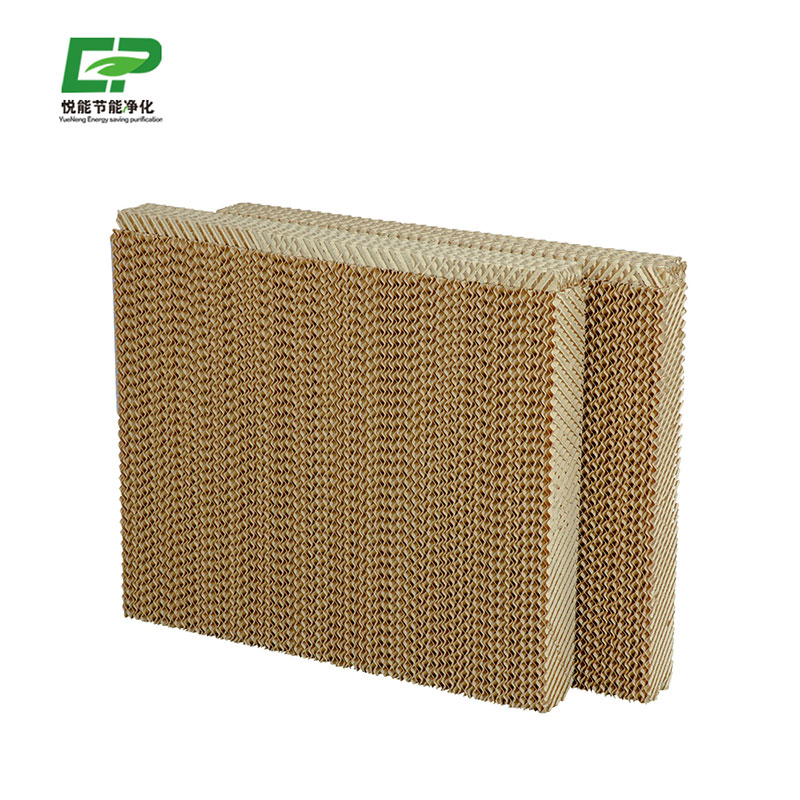
Integrating high efficiency 5090 6090 evaporative cooling pads requires precise, customized fan pairings to overcome static pressure without compromising velocity.
While custom solutions carry a higher upfront CAPEX and longer lead times, they prevent the OPEX bleed of running undersized, inefficient units continuously.
Selecting an evaporative air cooler airflow supplier should heavily depend on their ability to provide transparent psychrometric data rather than generic temperature-drop promises.
The goal of industrial evaporative cooling goes far beyond just dropping the ambient temperature. You must maintain a specific air exchange rate and an acceptable humidity level simultaneously. Standard systems often miss these vital success criteria entirely. They focus heavily on generic output volumes rather than targeted environmental control. You need exact control over air velocity and moisture introduction.
Generic models struggle heavily in complex physical environments. They typically fall short in three major operational areas.
Inadequate throw distance: Long-aisle warehouses or massive aircraft hangars require air to travel vast distances. Standard fans simply lack the mechanical thrust to reach the end of these deep zones.
Inability to overcome negative pressure: Heavy industrial exhaust systems suck air out of a facility rapidly. Standard blowers cannot overpower this artificial vacuum, leaving cooling systems choked.
Mismatched airflow-to-water-flow ratios: If the pump delivers insufficient water, dry spots form on the cooling media. If the fan pulls excessively hard, water carryover spits moisture directly into the airstream.
Customization solves these exact physical limitations dynamically. We define "custom" as intentionally altering core mechanical components for precise application. You might change the fan pitch or adjust the internal motor RPM. You could redesign ducting configurations entirely to route air better. Custom setups also modify water distribution networks to meet strict evaporative air cooler airflow specifications. This dedicated engineering ensures the air exchange rate precisely matches your rigorous operational demands.
Facility managers must recognize when standard systems hit their functional limits. Certain environmental factors instantly signal the need for engineered air dynamics. Watch closely for these four primary trigger events.
Highly Concentrated Sensible Heat Loads: Standard units expect evenly distributed warmth across an open floor. Some spaces generate massive, localized heat islands instead. You see this heavily in facilities housing heavy machinery. Server farms and injection molding equipment also produce extreme radiant heat. These zones demand concentrated, high-velocity air streams to break up isolated thermal pockets.
Complex Facility Geometries: Air naturally takes the path of least resistance. Multi-level mezzanines disrupt this flow immediately. Narrow corridors channel air unpredictably. Dense physical obstructions block standard horizontal airflow entirely. When your facility layout features complex geometries, standard units waste energy pushing air into walls. Custom ducting and targeted fan pressures navigate these physical barriers effectively.
Strict Environmental Compliance: Many manufacturing facilities face rigid air velocity limits. Fast-moving air can disrupt lightweight materials on an active assembly line. Open chemical processes require gentle, steady ventilation to remain safe. An off-the-shelf system blasts air randomly across the floor. A custom-engineered system delivers the required cooling volume at a perfectly calibrated speed.
Integration with Complex HVAC Networks: Modern facilities often combine multiple climate systems. An industrial air cooler sometimes functions as a pre-cooling stage for existing mechanical chillers. This tandem operation requires precise volumetric flow matching. If the evaporative unit pushes excessive air, the mechanical chiller chokes. Custom specifications ensure both systems operate in perfect aerodynamic harmony.
Customizing airflow is a precise and highly mathematical science. It involves much more than just installing a bigger internal fan. You must execute a delicate balancing act across the entire system. The airflow velocity must perfectly match the saturation efficiency of the wet media.
Industrial systems rely heavily on structured cellulose pads. They act as the absolute engine of the evaporation process. You must understand the operational differences between various pad types.
Integrating high efficiency 5090 6090 evaporative cooling pads dictates your entire motor strategy. The 5090 pad features a tighter flute angle. It delivers superior cooling efficiency but creates a severe pressure drop. The 6090 pad features a wider angle. It generates a lower pressure drop and easily handles higher air velocities.
Evaluation Dimension: Choosing the right pad thickness directly dictates the required motor power. Dense media restricts air movement significantly, requiring stronger propulsion.
5090 vs. 6090 Media Comparison
Specification Feature | 5090 Series Pads | 6090 Series Pads |
|---|---|---|
Flute Angle | 45° / 45° (Tighter crossing) | 45° / 15° (Wider crossing) |
Air Resistance | High static pressure drop | Low static pressure drop |
Cooling Efficiency | Maximum saturation potential | Moderate to high saturation |
Best Use Case | High-heat facilities needing maximum temp drop | High-velocity systems prioritizing total air volume |
Custom units must overcome severe static pressure daily. They push air through dense media and complex facility ductwork. Standard generic motors will quickly burn out under this heavy strain. You must upgrade motor specifications to handle this specific aerodynamic resistance. This step ensures long-term reliability without catastrophic hardware failure.
Custom solutions deliver superior performance but introduce unique project challenges. You must evaluate these operational risks thoroughly before signing purchase orders.
Off-the-shelf units ship almost immediately from standard warehouses. Custom engineering operates on a vastly different timeline. Teams must design, prototype, and manufacture your highly specific configuration. This specialized process demands significantly more time. You must factor these extended lead times into your seasonal facility planning.
Upgraded cooling systems carry heavier physical and electrical footprints.
Reinforced Roof Mounting: Custom high-capacity units feature heavier motors and thicker steel frames. You may require reinforced roof mounting points to handle the extra structural load safely.
Electrical Infrastructure: Powerful custom blowers pull serious amperage during operation. Upgraded electrical infrastructure is often entirely necessary. You might need mandatory three-phase power upgrades to support the new custom motor specs.
Standard units use easily sourced, generic replacement components. Custom systems use highly specific, engineered parts. You might need unique fan blades or non-standard drive belts. These specialized components are rarely available at local hardware suppliers. Facility managers must establish a strategic spare parts inventory early. This proactive step prevents minor part failures from causing major production downtime.
Custom engineering absolutely requires a higher initial capital expenditure. However, you must weigh these initial engineering costs against guaranteed performance outcomes. Precision airflow prevents the massive OPEX bleed of running undersized units continuously. You achieve substantial long-term energy savings and actively protect your facility production efficiency.
Finding the right manufacturing partner makes or breaks your entire project. You cannot rely on generic sales pitches for customized engineering.
Demand hard data for your specific facility layout. An expert evaporative air cooler airflow supplier will provide detailed psychrometric charts. They should run computational fluid dynamics (CFD) modeling for your unique space. Do not accept generic marketing brochures as legitimate proof of concept. You need concrete evidence based on your exact square footage and local climate.
Watch out for vendors who overpromise quickly without asking operational questions.
Avoid suppliers who guarantee a specific temperature drop without asking for local wet-bulb temperature data. Evaporative efficiency relies entirely on ambient outdoor humidity.
Reject vendors who cannot explain the static pressure limitations of their proposed design. If they ignore pressure drops, their motors will fail prematurely.
Take direct control of the procurement process immediately. First, request a comprehensive site audit from your shortlisted vendors. This audit must include a detailed heat load calculation and precise airflow mapping. Second, demand a pilot test. Ask for an empirical case study of a physically similar facility. Do this before committing capital to a full facility rollout.
Committing to custom evaporative air cooler airflow is a strategic operational investment. It is strictly reserved for facilities where environmental control directly impacts production efficiency or worker safety. Generic systems work fine for average spaces, but they fail completely in extreme environments.
If your facility exhibits complex geometries or extreme heat loads, stop evaluating standard units immediately. Do not waste capital on equipment destined to underperform. Begin compiling your specific heat data right now. Map out your spatial constraints and exhaust volumes meticulously. Use this exact data to initiate serious conversations with specialized engineering suppliers. You can then secure the targeted, high-efficiency cooling your facility actually demands.
A: Focus on the required Air Changes per Hour (ACH) based on facility volume, local climate (wet-bulb temperature), and internal heat loads, rather than just square footage.
A: No. If airflow velocity exceeds the absorption capacity of the cooling pads, it leads to "water carryover" (spitting water) and reduced cooling efficiency.
A: The numbers refer to the angles of the corrugated sheets. 5090 offers higher cooling efficiency and higher resistance, requiring stronger custom fans. 6090 offers less resistance, allowing for higher volume airflow with less energy, but slightly lower evaporation rates.
A: Upfront costs can be 30-50% higher due to engineering and specific component sourcing, but operational ROI is typically realized through precise energy usage and preventing production losses.


