


Views: 0 Author: Site Editor Publish Time: 2026-09-26 Origin: Site


Facility and farm managers face a harsh operational reality every day. Maintaining exact cellulose dimensions is absolutely critical for your system. It ensures consistent static pressure, optimized air velocity, and peak evaporation efficiency. Over time, however, severe environmental challenges arise constantly. Poor water quality, rapid algae growth, and heavy scale buildup aggressively degrade the cellulose structure. These elements cause paper walls to swell, sag, or thin out significantly.
This physical degradation directly harms your facility's cooling performance and energy efficiency. We designed this comprehensive guide to establish a clear baseline. You will learn how to evaluate your current setup accurately. We will help you determine when an existing cooling pad can be saved through rigorous maintenance. You will also discover when irreversible structural collapse requires engaging a replacement supplier to protect your operations.
Evaporative climate control relies on precise aerodynamic fundamentals to function properly. The specific depth of the cellulose media dictates the exact air-to-water contact time. For example, a 6-inch wall provides a significantly longer contact window than a 4-inch wall. This extended contact allows the moving air to absorb more moisture efficiently. Heat absorption occurs rapidly before the cooled air enters the main building. If you lose this critical depth through physical wear, cooling capacity drops immediately. The air moves through the thinned media too quickly to cool down properly.
Pressure drop realities hit extremely hard when original dimensions change. Any deviation from the original cooling pad thickness specifications hurts overall performance. Sagging paper creates uneven gaps, while thick mineral blockages restrict airflow severely. This physical restriction sharply increases static pressure inside the facility. Exhaust fans must work much harder to pull air through the clogged, distorted media. They consume significantly more electricity just to achieve the baseline airflow volume.
The true cost of physical degradation extends far beyond the exhaust fans. When compromised media cannot hold sufficient water evenly, evaporation rates plummet drastically. We see this failure translate to measurable, dangerous temperature increases inside the building. Higher indoor temperatures stress livestock, reduce feeding rates, and spoil sensitive inventory. Consequently, you pay much higher monthly utility costs while receiving considerably less cooling output. System efficiency depends entirely on preserving the structural geometry of the paper flutes.
Protecting your equipment investment requires strict, non-negotiable maintenance routines. Water quality and pH management sit securely at the top of this priority list. You must maintain a strict target pH range between 6 and 8. Water running too alkaline causes rapid, rock-hard calcium scale buildup. Conversely, highly acidic water aggressively dissolves the stiffening resin holding the fibers together. Proper bleed-off rates are equally essential for long-term survival. Bleeding off old water flushes out continuous, heavy mineral concentrations safely. It prevents heavy scale from cementing the delicate paper flutes shut permanently.
Daily drying cycles represent your absolute best defense against biological decay. You must turn off the circulating water pump once every 24 hours. Leave the massive exhaust fans running to pull fresh air through the wet media. This airflow completely dries the cellulose fibers from the inside out. A thorough daily dry cycle halts rapid algae growth instantly. It also prevents the paper walls from permanently swelling and losing their factory shape.
Safe cleaning protocols prevent accidental mechanical damage to the structure. Never use aggressive high-pressure washers on wet cellulose media. The fierce water jets will instantly crush the fragile paper flutes flat. Furthermore, you must completely avoid harsh chlorine or highly acidic cleaning chemicals. These corrosive chemical agents strip away the protective factory resin quickly. Once the stiff resin disappears, the media loses its rigidity entirely.
Follow this optimal maintenance schedule to preserve physical dimensions:
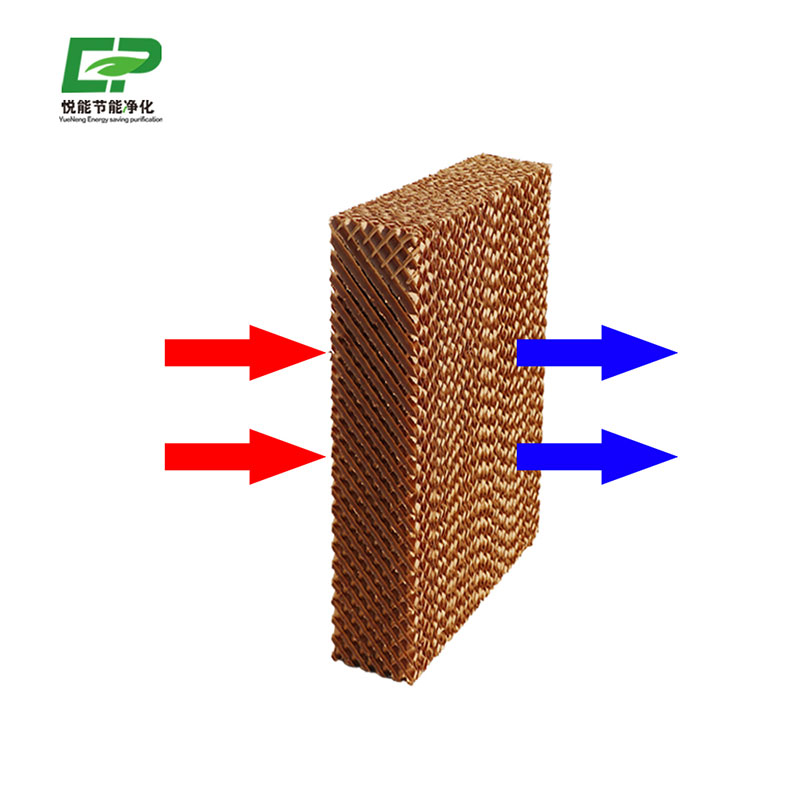
The modern agricultural sector presents highly unique challenges for climate control systems. The 7090 flute angle advantage solves many of these very specific issues. This geometric configuration uses unequal flute angles, typically crossing at 45 degrees and 15 degrees. It remains the undisputed industry standard for massive poultry houses globally. The steep angle directs water flow efficiently down the front face. The shallower angle guides incoming hot air upward through the wet paper. This unique cross-fluted design creates optimal airflow resistance and maximum cooling capacity simultaneously.
Particulate management poses a massive, daily hurdle in these agricultural environments. Poultry facilities naturally generate immense volumes of dust, dirt, and airborne feathers constantly. These dry particulates smash into the wet, sticky paper walls repeatedly. Over time, they combine with water to create a thick, heavy sludge. This sludge heavily blocks incoming air and fills the flute gaps completely. It essentially suffocates the entire ventilation system if left unchecked by farm staff.
Maintenance adaptation is absolutely necessary to combat this specific organic debris. You must safely remove this heavy buildup without crushing the sharp flute edges. Always wait until the media is completely dry before attempting any cleaning. Use a soft-bristled utility brush to gently sweep the exterior face downward. Alternatively, use low-pressure compressed air to blow dry debris safely away. Preserving the effective air intake geometry ensures the complex system breathes freely.
Every facility manager must eventually decide if ongoing repairs remain viable. Physical inspection markers provide immediate visual and tactile feedback regarding structural health. Start your audit with the classic pinch test on the very bottom edge. Gently squeeze the lower flutes between your thumb and index finger. If you feel soft, mushy cellulose, it strongly indicates irreversible resin loss. Next, look carefully for visible sagging across the upper installation frame. Sagging creates large, dangerous gaps at the very top of the wet wall. Untreated, boiling hot air bypasses the wet media entirely through these open gaps.
Performance metrics offer solid, data-driven proof of impending structural failure. Measure the actual static pressure drop across the running wet wall carefully. Compare this current reading against the original equipment manufacturer baselines. A massive pressure increase clearly indicates clogged, permanently swollen paper flutes. You may also notice a frustrating failure to reach target temperature differentials. If the water systems run perfectly clean but the building remains dangerously hot, the media is failing.
We must establish a clear, definitive verdict on overall system viability. If the physical structure is severely compromised, further maintenance becomes a sunk cost. No amount of careful cleaning will restore chemically dissolved resin. You cannot un-crush flutes flattened under heavy water weight. Replacement becomes an absolute, unavoidable necessity to protect valuable livestock or critical inventory.
| Observation Marker | Condition Indicated | Recommended Action |
|---|---|---|
| Light surface dust when dry | Normal environmental accumulation | Gently brush or air-blow the surface |
| Slight mineral scaling | Minor water hardness issues | Adjust pH levels and increase bleed-off |
| Soft, mushy bottom flutes | Severe resin degradation | Schedule a full system replacement |
| Visible sagging at the top | Structural collapse and waterlogging | Replace immediately to prevent hot air bypass |
When extensive repairs fail, you must source high-quality replacement materials very carefully. Consistency in manufacturing remains a critical priority during this vendor selection process. Buyers must demand verifiable testing data from any potential new partner. Consistent dimensions ensure perfectly even airflow distribution across the entire facility wall. Thin spots or unevenly packed cellulose create highly dangerous hot zones inside the building.
Resin curing standards separate premium, durable products from cheap, temporary alternatives. You should actively question vendors on their specific cellulose curing process. High-quality, properly baked resin dictates exactly how well the paper withstands rigorous maintenance. It allows the material to endure years of constant, heavy water exposure without softening.
Edge coating options add another powerful layer of long-term mechanical protection. Evaluate carefully whether the vendor offers proprietary edge treatments for their specific products. These tough, hardened coatings protect the exposed outer face from harsh UV radiation. They also defend the most vulnerable, exposed parts against mechanical wear and accidental brushing damage.
Take actionable, organized next steps to secure the absolute best replacement parts. We highly recommend using a strict shortlisting framework for evaluating potential vendors. Request detailed specification sheets and physical material samples first before making decisions.
Follow these specific steps when evaluating a new vendor:
Protecting your optimal cooling pad thickness remains a matter of strict operational discipline. It requires highly dedicated water management and very careful physical handling daily. Ignoring essential daily dry cycles or crucial pH balances guarantees premature structural failure.
We highly encourage facility managers to conduct a comprehensive physical audit today. Walk through your large buildings and inspect the lower flutes extremely carefully. Use the specific evaluation criteria we provided to spot irreversible sagging or mushy soft spots. Identifying these critical structural issues early prevents catastrophic temperature spikes during peak summer heat.
Do not wait for a complete system collapse to finally take action. Download our comprehensive daily maintenance checklist to standardize your vital farm procedures immediately. Request a professional, on-site system evaluation if you suspect severe airflow restrictions. Contact our highly experienced sales engineering team for a competitive quote on premium replacement media.
A: You should typically replace them every 3 to 5 years. This timeframe depends heavily on your local water hardness. Strict maintenance adherence and harsh operating environments also affect lifespan significantly. Executing daily drying cycles extends this operational period dramatically.
A: No, you must never use bleach. Strong oxidizers like bleach aggressively break down the specialized resin holding the fragile cellulose paper together. Using bleach leads to immediate structural degradation, severe swelling, and total system collapse.
A: This uneven swelling usually indicates massive structural failure. It results directly from continuous waterlogging without a proper daily drying cycle. A clogged lower drainage system can also trap water. The bottom layers absorb excess water weight, swell permanently, and lose all cooling efficiency.


