


Views: 316 Author: Site Editor Publish Time: 2026-04-15 Origin: Site


When summer gets intense, staying cool turns into a real priority for both businesses and homeowners. At first glance, terms like evaporative air cooler and air cooler can sound like the same thing. A lot of brochures and product pages even use them almost interchangeably, which honestly makes the whole topic more confusing than it needs to be.
But they are not exactly the same. And if you are trying to cool a warehouse, workshop, factory, or any large commercial space, that difference matters a lot. Choosing the wrong system can leave you with high energy bills, weak cooling performance, or a space that still feels hot and uncomfortable.
This guide clears things up in a simple way. We will look at how each system works, where each one performs best, and why an industrial evaporative air cooler is often the smarter option for large-scale cooling.
The phrase air cooler is pretty broad. In everyday use, it can refer to several types of cooling devices, from a basic fan to a portable room cooler. In many cases, though, a standard air cooler mostly moves air around without actually lowering the temperature of the room.
An evaporative air cooler is different. It does not just create airflow. It uses water evaporation to reduce the actual temperature of the air before sending it into the space.
That distinction is what separates light relief from real cooling.
A regular fan or standard air cooler creates a wind-chill effect. It blows air across your skin, which helps sweat evaporate faster and makes you feel cooler. The room itself, however, stays at basically the same temperature.
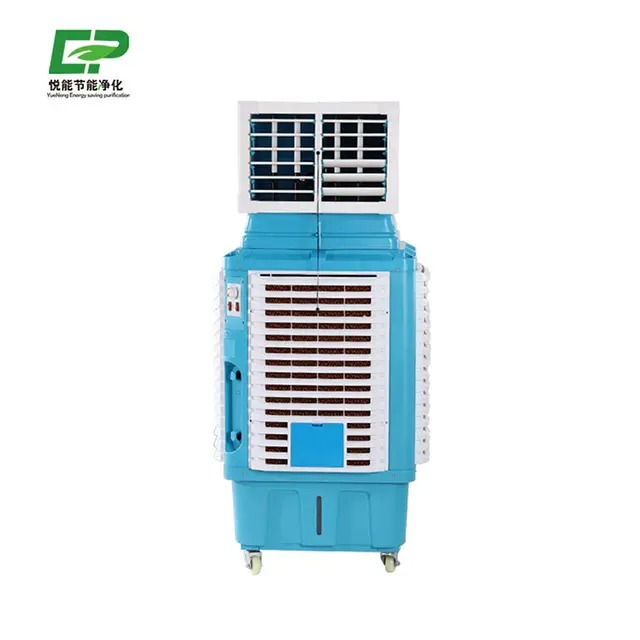
An evaporative air cooler does more than that. It pulls warm air through water-soaked cooling pads. As the water evaporates, it absorbs heat from the air. The result is cooler air being pushed into the building.
So instead of just moving hot air around, the system actually changes the air temperature. In the right environment, that can make a major difference.
From the outside, these systems can look pretty similar. Both usually have a fan, a casing, and vents. But inside, the setup is completely different.
A standard air cooler or fan is relatively simple. It mainly relies on a motor and blades to circulate air.
An evaporative air cooler includes extra components such as a water tank, a pump, and cooling pads. Those are the parts that make the cooling process possible. That is also why evaporative systems can offer stronger temperature reduction while still using less power than many refrigerated systems.
An industrial evaporative air cooler follows a pretty straightforward process:
Strong fans draw in warm outdoor air.
A pump sends water over thick cooling media, keeping the pads evenly wet.
As the hot air passes through the wet pads, the water evaporates and absorbs heat from the air.
The system pushes that cooled air into the building at a high airflow rate.
This process is simple, efficient, and especially useful in large areas where constant fresh airflow matters.
In industrial or commercial settings, cooling is not just about lowering the temperature a little. It is also about moving enough air to keep the whole space comfortable.
That is where CFM, or cubic feet per minute, becomes important. A high CFM rating means the system can move a large volume of air quickly. In big spaces like factories and warehouses, that steady air exchange helps prevent heat from building up in one place.
Instead of recirculating stale indoor air, evaporative coolers keep bringing in fresh, cooled air from outside. That makes the space feel more breathable and less stuffy, which is a big advantage in work environments.
This is probably the most important factor when choosing between systems.
Evaporative cooling works best in dry or moderately dry climates. If the air outside is already full of moisture, the evaporation process becomes less effective. That means the cooling effect drops.
In hot and dry regions, though, evaporative coolers can perform really well. They can lower the temperature noticeably while also adding a bit of moisture to dry air, which can make the environment feel more comfortable overall.
If you live in a place with very high humidity, this type of system is usually not the best fit on its own. In that case, traditional refrigerated air conditioning may be the better option.
One of the biggest reasons businesses choose evaporative cooling is the lower operating cost.
Traditional air conditioning systems rely on compressors, and compressors use a lot of electricity. An evaporative air cooler, by comparison, mainly powers a fan motor and a water pump. That setup uses much less energy.
Over time, that can translate into major savings, especially in large facilities where cooling needs are constant. For a warehouse or manufacturing site, the difference in annual electricity cost can be significant.
Water use is part of the equation, of course, but in many industrial settings, the cost of water is still much lower than the cost of running a large refrigerated cooling system full-time.
Another advantage of evaporative systems is that they are easier to maintain.
A refrigerated cooling system often involves compressors, refrigerants, sealed coils, and more complex servicing requirements. Maintenance usually needs trained technicians and can get expensive.
An industrial evaporative air cooler is mechanically simpler. Most routine care involves cleaning the tank, checking the pump, and maintaining or replacing the cooling pads when needed. There are fewer complicated parts, which usually means fewer expensive repairs.
For businesses that want practical, low-stress cooling, that simplicity matters.
One nice thing about industrial evaporative coolers is that they can be used in different ways depending on the space.
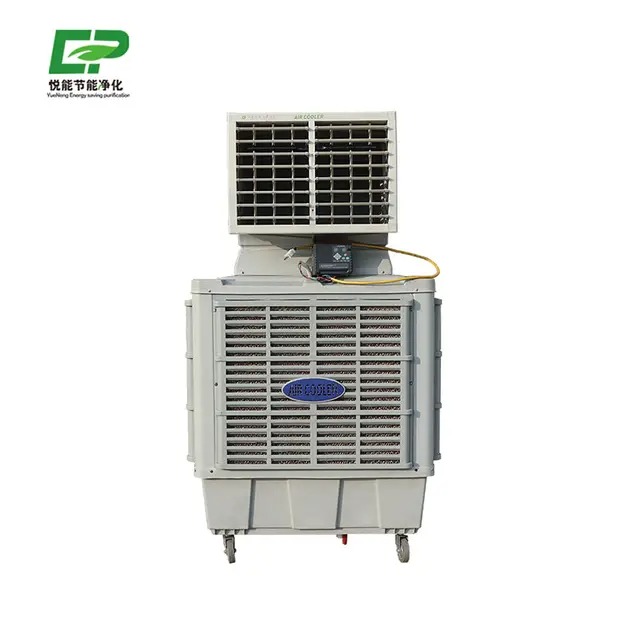
Some worksites have certain areas that get much hotter than others, especially near equipment or production lines. In those cases, a portable evaporative cooler can be rolled directly to the problem area and used exactly where cooling is needed most.
For full-building cooling, fixed evaporative units can be mounted on rooftops or side walls and connected to a permanent water supply. These systems are designed to move large volumes of air across wide spaces, making them a solid option for factories, warehouses, and logistics centers.
Compared to trying to cool a giant building with multiple small fans, a properly sized evaporative system is much more effective and easier to manage.
If sustainability is part of the decision, evaporative cooling has a strong case.
These systems use water instead of chemical refrigerants. That means there is no risk of refrigerant leakage, and the environmental impact is generally lower than that of traditional air conditioning systems.
They also consume less electricity, which reduces overall energy demand. For companies trying to improve efficiency or meet environmental goals, that can be a meaningful advantage.
Another benefit is air quality. Because evaporative coolers bring in fresh outside air instead of constantly recirculating indoor air, the space can feel cleaner and less stale. The wet pads can also help trap dust and other particles before the air enters the building.
Consumer-grade fans are usually not designed for harsh industrial conditions. Dust, vibration, and long operating hours can wear them out quickly.
Industrial evaporative air coolers are built differently. Many use durable materials such as corrosion-resistant housings, sealed motors, and stronger structural components that hold up better in demanding environments.
That kind of construction makes them a much better fit for warehouses, production facilities, workshops, and other heavy-use settings.
The cooling pads are one of the most important parts of the entire system. Better pads usually mean better performance.
High-quality industrial units often use specially treated cellulose pads with a honeycomb structure. These are designed to absorb water efficiently while resisting breakdown over time.
To keep the system working well, the pads need regular care, especially in areas with hard water. Mineral buildup can reduce performance if it is not managed. Some advanced systems include automatic drain or flushing functions to help reduce that issue.
With proper maintenance, the pads can last for years.
| Feature | Standard Air Cooler / Fan | Industrial Evaporative Air Cooler |
|---|---|---|
| Cooling method | Air movement only | Water evaporation |
| Room temperature change | Little to none | Noticeable reduction |
| Energy use | Low | Very low |
| Best climate | Most climates for personal airflow | Dry to moderately dry climates |
| Air quality | Moves existing air | Brings in fresh air |
| Initial cost | Lower | Moderate |
| Best use | Small spaces or personal use | Large spaces, commercial and industrial use |
If you are buying for a business, the better question is not “Which one is better?” but “Which one fits this space best?”
Here are a few things to consider:
Large facilities need high airflow and strong air exchange. That makes proper sizing essential.
If your area is dry, evaporative cooling can be a great solution. If humidity is consistently high, performance will be more limited.
Evaporative systems need steady access to water, especially during peak summer use.
Some spaces, like offices or showrooms, may need quieter models. Others, like factories, can handle standard industrial noise levels more easily.
Lower energy use can make a big difference over time, especially in large buildings.
The difference between a basic air cooler and an industrial evaporative air cooler is bigger than it first seems.
A standard fan or simple air-moving device can make people feel a little more comfortable, but it does not actually cool the room. An evaporative air cooler does. It lowers air temperature through a natural process, uses less energy than traditional refrigerated systems, and works especially well in large dry spaces where fresh airflow is important.
For warehouses, factories, workshops, and other commercial environments, that can make it a much more practical and cost-effective option. The key is making sure the climate and the application are right.
Once that part lines up, evaporative cooling can be a really smart investment.
Q1: Will an industrial evaporative air cooler leave everything wet?
No. When the system is installed and ventilated properly, the water evaporates into the air instead of settling as droplets on equipment or products.
Q2: Can I use it indoors with the windows closed?
No. These systems need airflow through the space. If the room is sealed, humidity builds up and the cooling effect drops.
Q3: How often do the cooling pads need to be replaced?
That depends on water quality, operating conditions, and maintenance, but high-quality pads can often last around three to five years.
We understand industrial cooling because it is what we focus on every day. Our factory specializes in designing and manufacturing high-performance evaporative air coolers for commercial and industrial applications.
We use advanced production equipment, detailed testing procedures, and strict quality standards to make sure every unit delivers reliable airflow, efficient cooling, and long-term durability. From large-capacity mobile coolers to fixed systems for major facilities, our goal is to provide cooling solutions that are practical, energy-efficient, and built to last.
For business partners who need dependable climate control, we offer both manufacturing strength and product experience that support real-world performance.


