


Views: 0 Author: Site Editor Publish Time: 2026-09-18 Origin: Site


Industrial ventilation systems face relentless attacks from humidity, chemical fumes, and airborne abrasives every single day. A single material failure in these systems can disrupt entire production lines. Finding the right balance of durability and budget is critical for smooth facility operations.
Selecting the wrong material for industrial or commercial ventilation leads to severe consequences. It causes premature failure and creates dangerous regulatory compliance gaps. Ultimately, it inflates replacement costs across the board. While a standard galvanized exhaust fan offers a proven baseline for heavy-duty airflow, its performance is not universal. Environmental exposure, coating thickness, and specific internal component materials heavily dictate its actual lifespan.
This guide provides facility managers and procurement engineers with an evidence-based evaluation framework. We will help you analyze material specifications and compare viable alternatives. You will learn how to select the exact structural configuration needed to match your unique operational environment.
Galvanized steel serves as the foundational material for most commercial air movement systems. Its popularity comes from a highly effective chemical process called cathodic protection. During manufacturing, plain steel receives a robust coating of zinc. This zinc layer acts as a sacrificial anode. If the metal suffers a scratch, the surrounding zinc oxidizes first. It sacrifices itself to protect the underlying steel from rust. This chemical reaction ensures the frame remains structurally sound even after minor surface damage.
However, not all galvanization is equal. Coating thickness dictates how long this protective reaction lasts. Standard commercial products often use a G60 rating. This means they feature 0.60 ounces of zinc per square foot. While adequate for dry indoor spaces, G60 degrades quickly outdoors. Heavy-duty industrial environments require G90 or higher ratings. A G90 coating provides 0.90 ounces of zinc per square foot. This thicker layer directly correlates with extended environmental resilience. It withstands higher humidity levels and moderate airborne contaminants.
This dynamic makes galvanized steel the default B2B choice. It offers an unbeatable cost-to-lifespan ratio for general manufacturing spaces. Facility managers need equipment that outlasts cheap alternatives without breaking the budget. Galvanized steel bridges the gap perfectly. It avoids the fragile nature of low-cost plastics. At the same time, it sidesteps the massive capital expenditure required for high-cost stainless steel systems.
Choosing a ventilation frame requires matching the material to the exact room conditions. A warehouse needs different protection than a chemical processing plant. We must compare galvanized steel against its three main competitors to understand its ideal placement.
Stainless steel represents the premium tier of industrial metals. It contains chromium, which forms an invisible, self-healing oxide layer. Stainless steel easily wins in continuous high-moisture areas or aggressive chemical washdown zones. However, this premium performance comes at a steep price. Stainless steel units typically cost two to three times more than standard models. Galvanized steel remains vastly superior for standard warehouses and agricultural settings. In these dry or moderately humid spaces, budget efficiency and structural rigidity take priority over extreme chemical resistance.
Fiberglass Reinforced Plastic (FRP) serves a very specific niche. FRP offers superior resistance to caustic chemicals and corrosive salt air. Facilities handling heavy acids often rely on FRP housings. The drawback lies in physical strength. FRP lacks the structural integrity of a solid metal frame. It struggles to support heavy, rigid ductwork without additional bracing. Galvanized metal provides the necessary backbone for massive ducting systems that FRP simply cannot handle.
Heavy-duty plastics have their place in light-duty applications. Plastic is highly suitable for light commercial or residential bathrooms. It produces low noise and guarantees zero rust over time. However, plastic fails under industrial high-static pressure. The material easily warps and flexes when pushing massive air volumes. Galvanized metal securely handles high-CFM (Cubic Feet per Minute) demands without bending or warping.
| Material Type | Primary Advantage | Ideal Environment | Budget Impact |
|---|---|---|---|
| Galvanized Steel | High structural rigidity | Warehouses, agriculture, factories | Moderate (Highly cost-effective) |
| Stainless Steel | Extreme corrosion resistance | Food processing, washdown zones | High (Premium pricing) |
| FRP (Fiberglass) | Chemical and salt resistance | Coastal areas, acid handling | Moderate to High |
| Heavy-Duty Plastic | Zero rust, lightweight | Residential, light commercial | Low (Budget-friendly) |
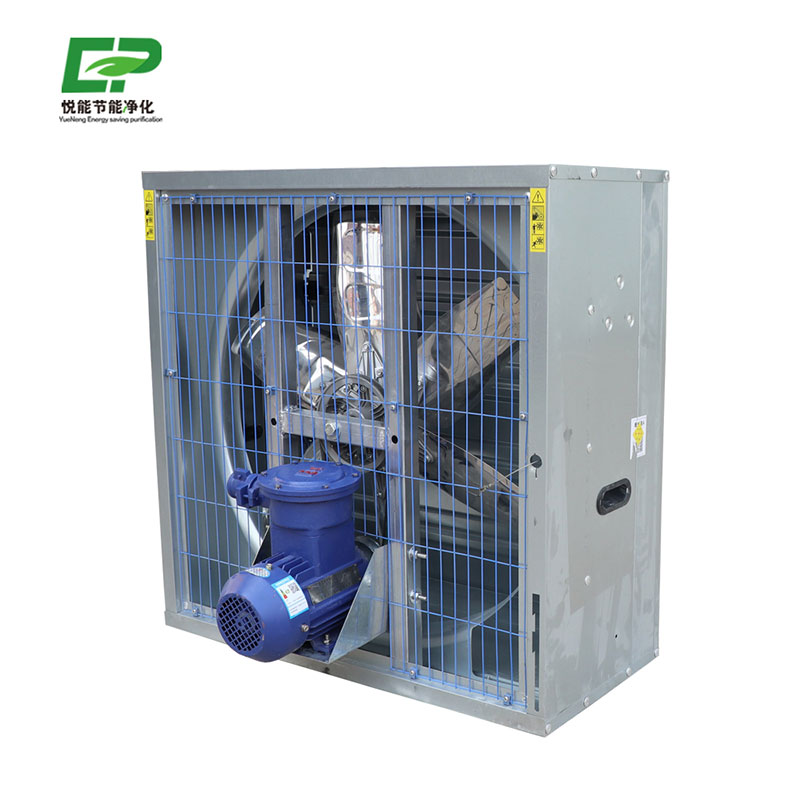
A ventilation unit functions as a unified system. The outer housing only tells half the story. The internal components dictate daily operational efficiency. You must evaluate the internal materials closely when reviewing your galvanized exhaust fan specifications.
The impeller blades endure constant friction and stress. Manufacturers typically offer two primary metal options for these moving parts.
Combining different metals in a single unit introduces a hidden danger: galvanic corrosion. When dissimilar metals touch in a humid environment, an electrical exchange occurs. This rapidly corrodes the weaker metal. If a manufacturer mounts raw aluminum shutters directly to a bare steel frame without isolation, the assembly will degrade quickly. Always ensure components feature proper rubber gaskets or isolation mounts.
The motor itself needs adequate protection. You cannot pair a highly durable G90 frame with a cheap, open drip-proof motor. Industrial applications require Totally Enclosed Fan Cooled (TEFC) motors or epoxy-coated housings. These sealed designs match the overall durability of the galvanized housing. They prevent dust and moisture from shorting the electrical windings.
Installation structural integrity matters just as much as fan construction. Heavy galvanized units require robust mounting brackets. Structural engineers must calculate the wall load before installation. Additionally, consider the ducting type. Galvanized frames provide excellent rigid connection points for heavy sheet metal ducts. If you use flexible ducting, ensure the fan housing includes smooth, flanged collars to prevent fabric tears during high-vibration operation.
Standard materials pose severe risks in volatile environments. Airborne dust, chemical fumes, and flammable vapors can ignite from a single stray spark. Regulatory bodies enforce strict material limitations in these hazardous zones. You cannot simply install a standard off-the-shelf unit.
Explosion-proof compliance dictates both electrical and mechanical construction. Let us examine a specific use case: a galvanized frame explosion proof 900mm exhaust fan. Many buyers wonder why this unit can utilize a galvanized steel frame in a flammable area. The answer lies in spark-resistant engineering protocols.
According to AMCA (Air Movement and Control Association) guidelines, the outer frame can be steel as long as the moving parts cannot generate sparks. To meet AMCA Type A, B, or C spark-resistant standards, the blades must consist of a non-sparking material. Manufacturers typically use specialized aluminum or composite plastics for the impeller. If a bearing fails and the aluminum blade strikes the steel housing, it will not produce a spark.
Furthermore, these specialized units require explosion-proof enclosed motors. These heavy-duty motors contain any internal electrical short. They prevent internal sparks from igniting the volatile air outside the motor casing. Proper grounding of the rigid galvanized housing is also mandatory. Grounding prevents static electricity build-up, neutralizing another common ignition source in specialized manufacturing applications.
Procurement teams must carefully vet their manufacturing partners. Marketing claims about "rust-proof" materials often fall short in reality. A reliable supplier provides transparent documentation and follows strict handling protocols.
Start by requesting verification of standards. Ask the manufacturer for proof of their galvanization grades. They should readily provide mill test reports showing G60 or G90 thickness levels. Additionally, request copies of their AMCA performance certifications and UL electrical safety listings. A reputable factory will supply these documents immediately. Avoid vendors who rely solely on vague product brochures.
Shipping and handling practices reveal a lot about supplier quality. Galvanized products face a specific threat called "white rust" or zinc hydroxide. This chalky white substance forms when galvanized metal is stored or shipped in damp, unventilated conditions. If a supplier wraps newly galvanized units in tight plastic while moisture is present, white rust quickly consumes the sacrificial zinc layer. Always ask vendors about their climate-controlled storage and ventilated shipping protocols.
Use this simple shortlisting logic when you consult with potential vendors for your next project.
Material selection for industrial ventilation is never a simple binary choice. It remains a careful balancing act between environmental demands, stringent safety codes, and available capital expenditure. Galvanized steel stands out as the most pragmatic choice for most facilities. It delivers exceptional strength and reasonable longevity without draining maintenance budgets.
To move forward successfully, buyers should start by auditing their facility's specific air composition. Identify exact moisture levels and airborne contaminants. Next, consult with your structural engineers and safety compliance officers. Verify that your planned components align with local fire and building codes. Taking these actionable steps ensures you finalize the perfect configuration before signing a purchase order.
A: A standard unit lasts between 10 to 20 years. The exact lifespan depends heavily on the zinc coating grade, such as G90, and the installation environment. High humidity and chemical presence will reduce this timeline.
A: Yes. Once the sacrificial zinc coating is fully depleted or scratched down to the bare steel, red rust will inevitably form on the exposed metal.
A: Generally, no. While highly durable for standard air, direct exposure to harsh acids or continuous salt spray requires FRP (Fiberglass) or 316 Stainless Steel for safe operation.
A: It requires a combination of a specially sealed motor and non-sparking mechanical components, like aluminum blades. These elements prevent ignition, even if the outer housing remains galvanized steel.


